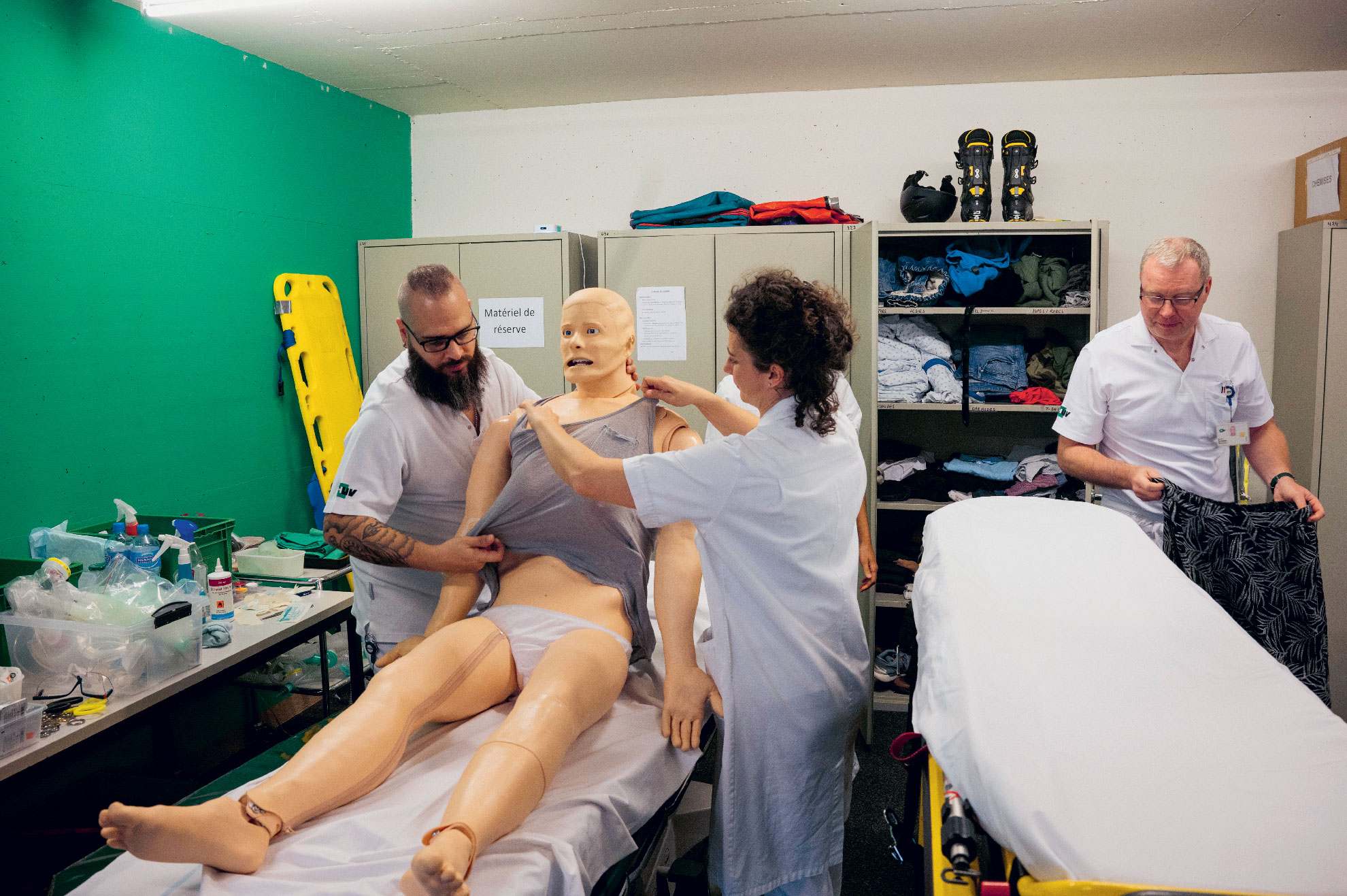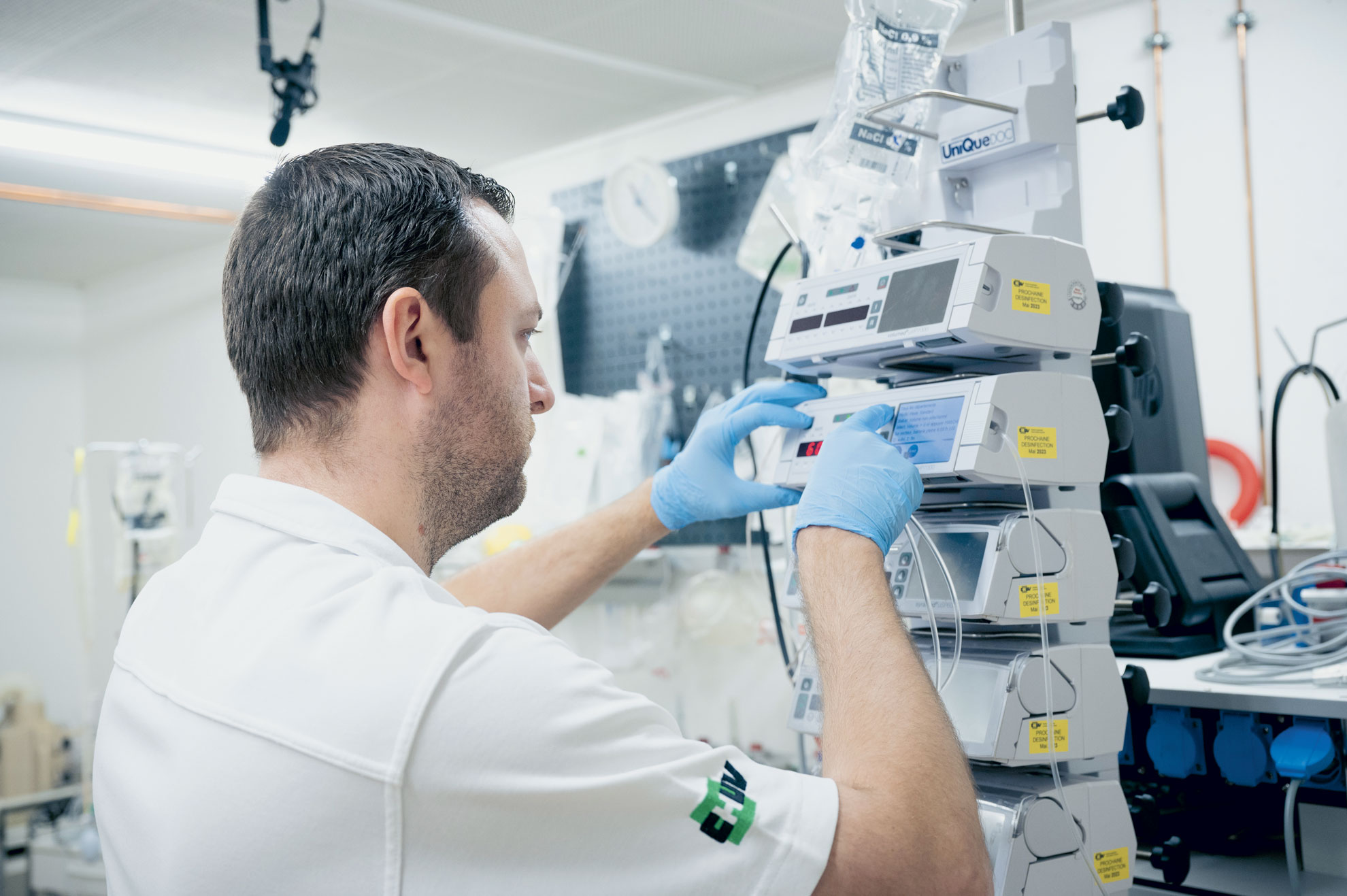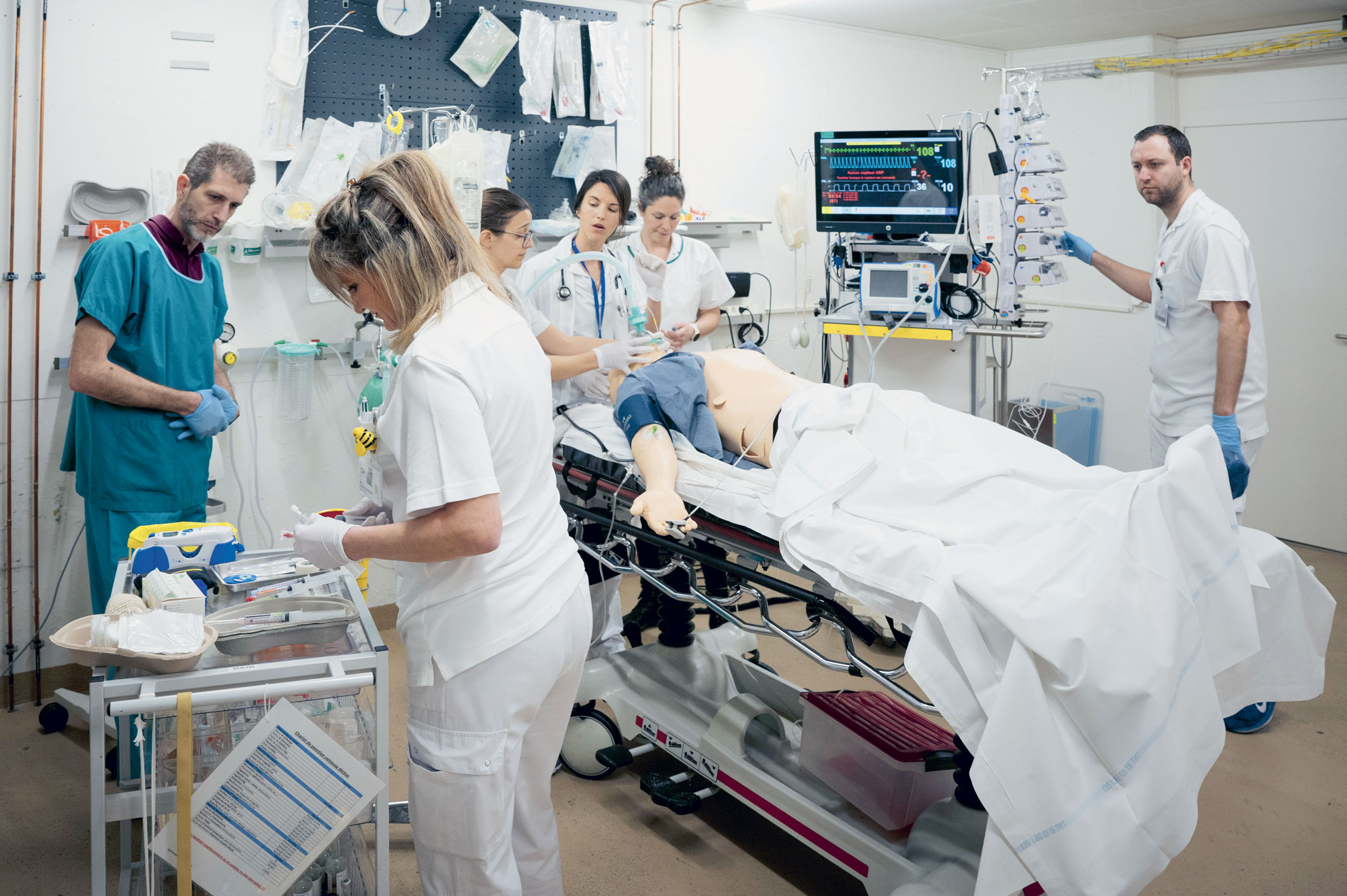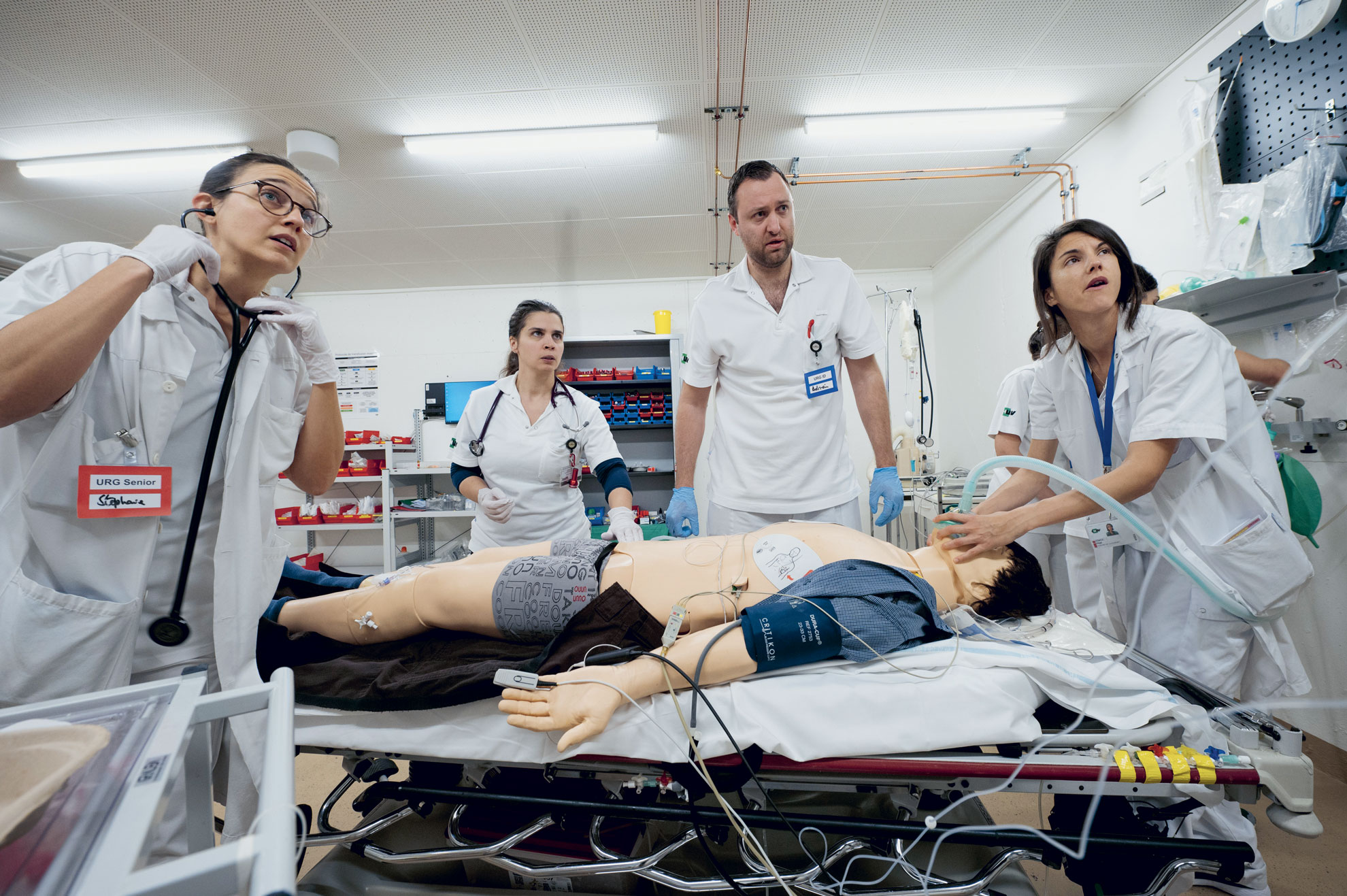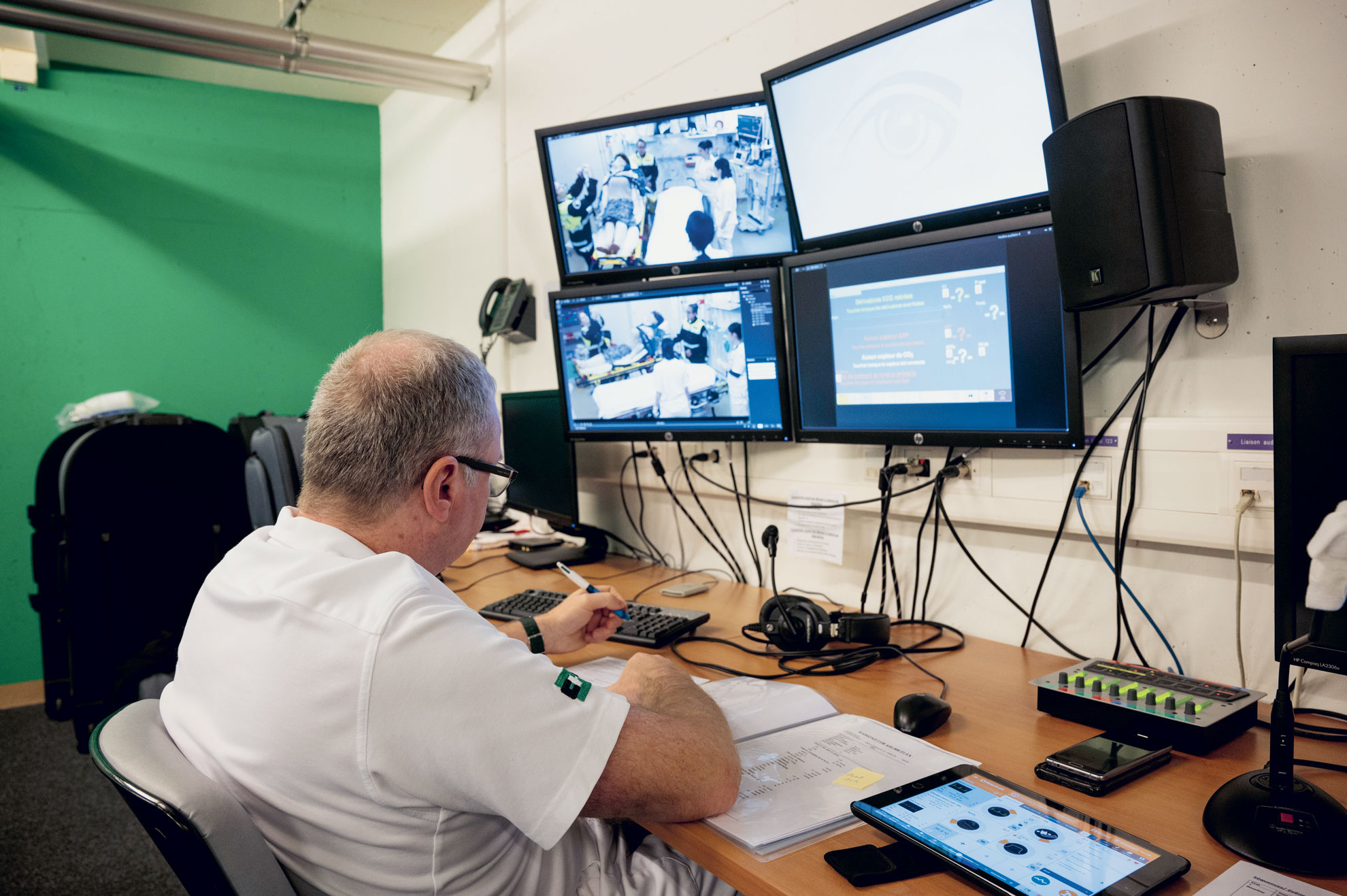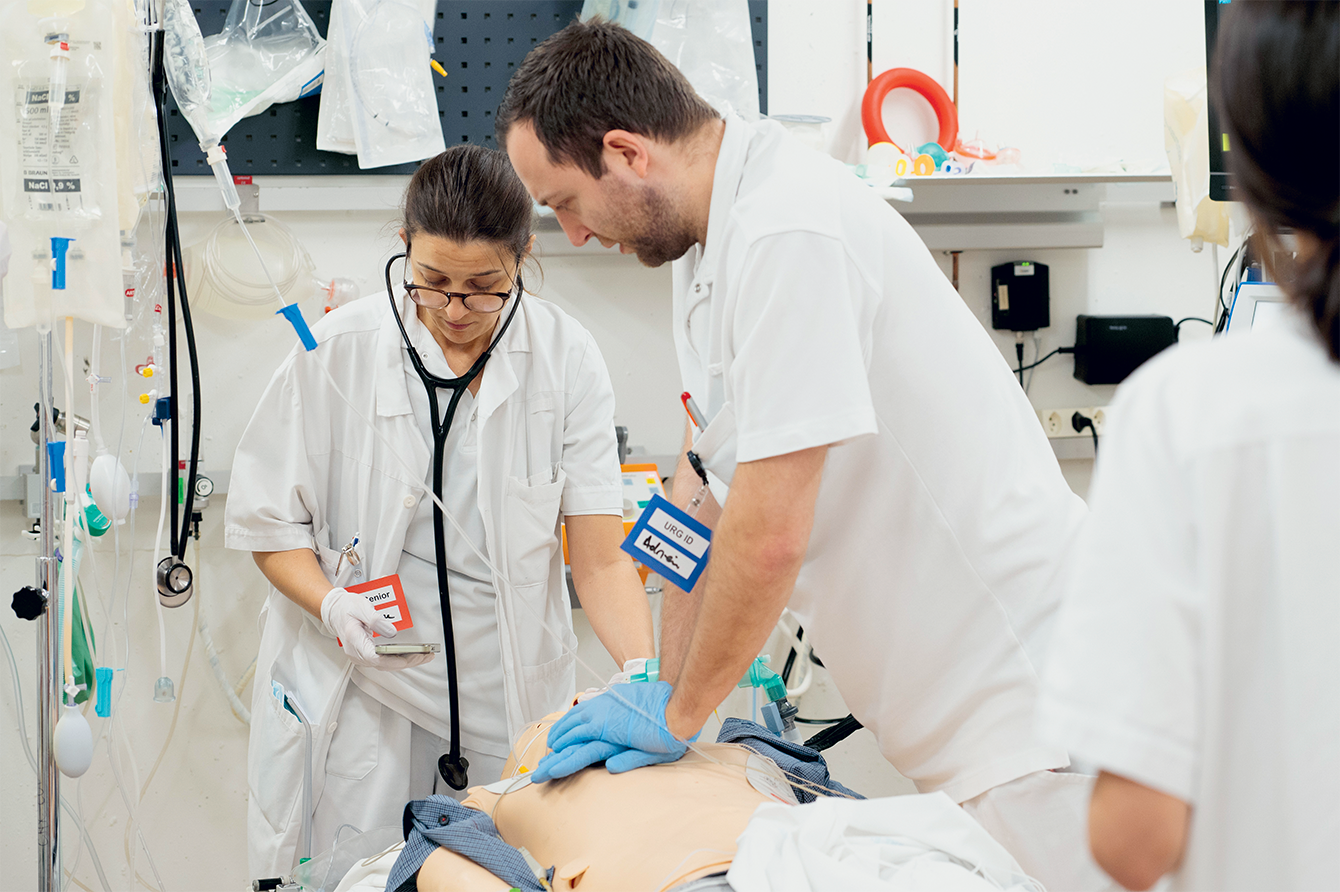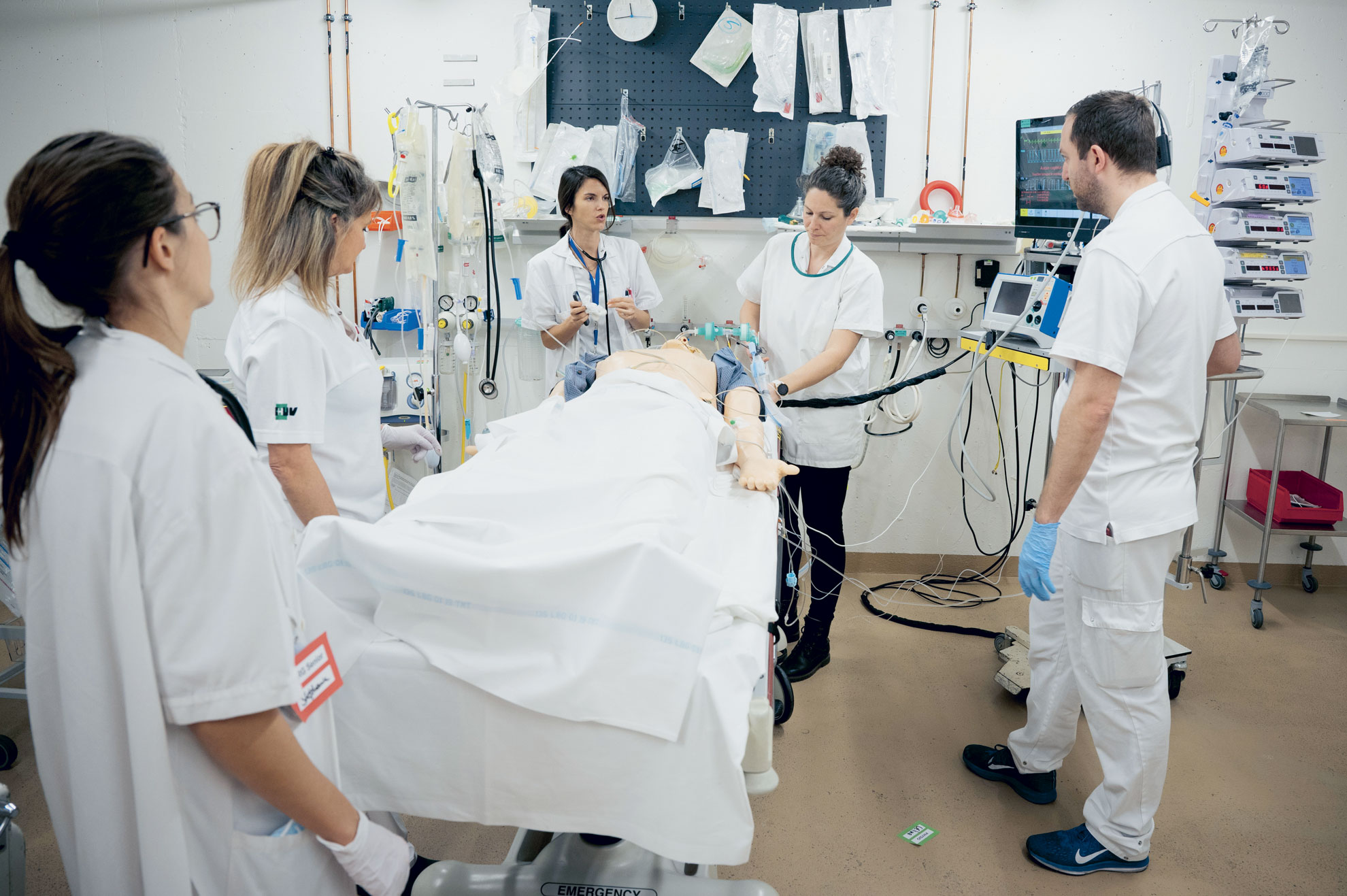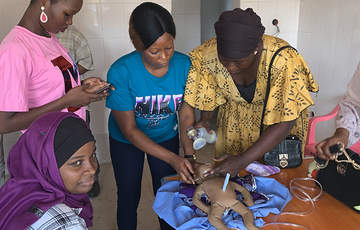

A 65-year-old man arrives at the emergency department. He lost consciousness in his flat and complains of chest pain. Upon arrival, his heart rate is already racing, his blood pressure is dropping, and then his heart stops. Cardiopulmonary resuscitation is started, adrenaline is injected, and the airway is secured. He will survive. This patient is actually an ultra-sophisticated simulation mannequin. Since 2012, the Emergency Department has offered training days focused on resuscitation room care, that is, situations requiring immediate intervention, such as cardiac arrest, serious trauma, or severe respiratory distress.
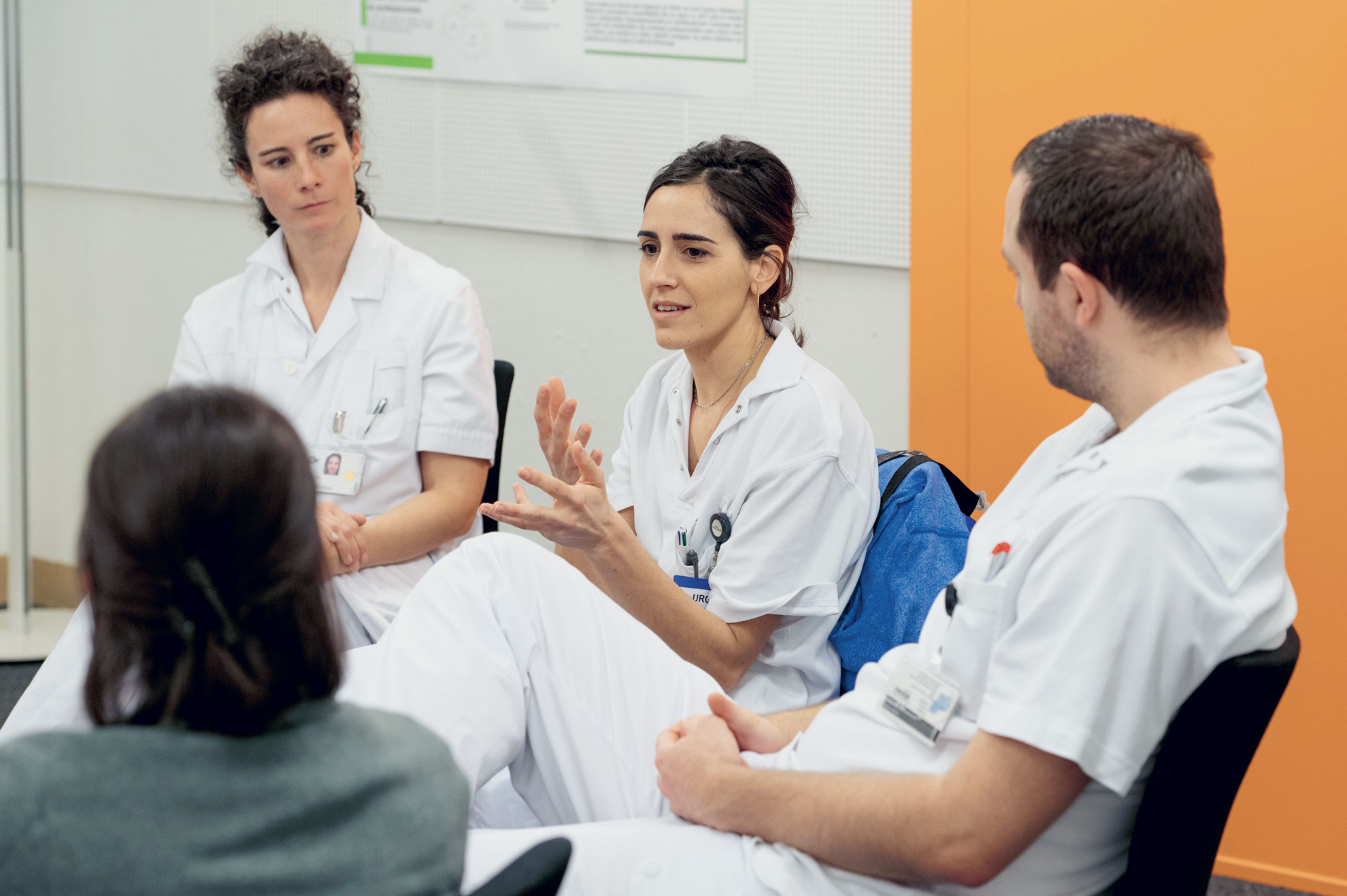
These advanced life support (ALS) training simulations, dating back to the early days of aviation, present doctors and nurses with vital emergency scenarios. "By taking the time to analyse their behaviour in critical situations, teams improve at the medical and nursing level and also train essential aspects, such as communication, leadership, and team management," explains Nicolas Beysard, associate physician in the CHUV emergency department and trainer. In total, nearly 1,000 people have participated in these simulations since the training was created.