
![[Translate to Anglais:]](https://www.invivomagazine.ch/fileadmin/_processed_/7/6/csm_320A9724-Modifier_59ec6abbed.jpg "[Translate to Anglais:]")
Good parental understanding promotes the child’s development
Publié il y a 7 mois
08.12.2025
Partager
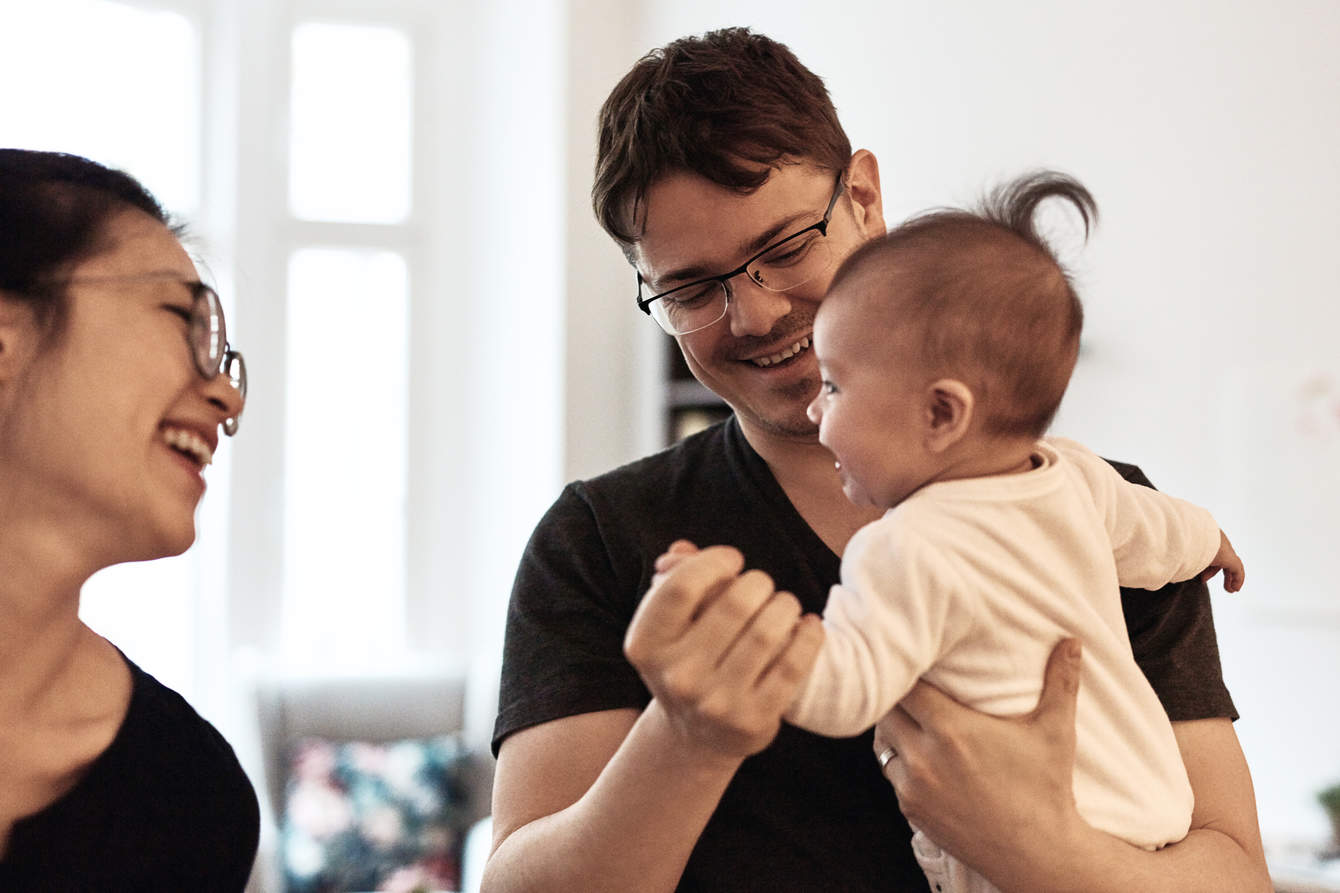
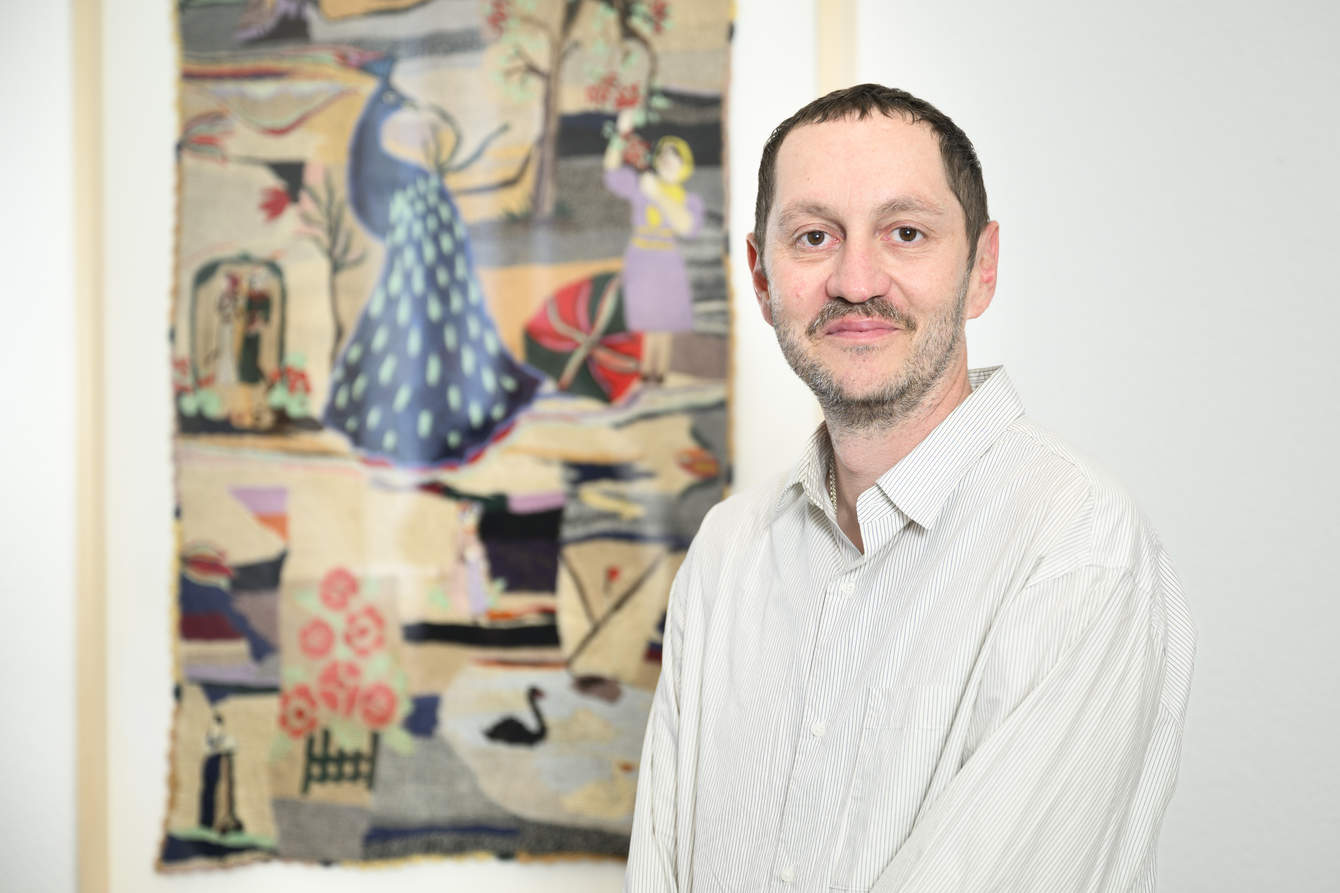
The arrival of the first child marks the birth of the family. This new entity brings new roles and also shifts generational dynamics. How do the relationships between father, mother, and baby take shape? What influence do family dynamics have on the psycho-emotional development of the child? These questions lie at the heart of research carried out by two generations of researchers in the Department of Psychiatry (DP) at CHUV: Elisabeth Fivaz, co-founder of the Centre for Family Studies (CEF), and Hervé Tissot, current head of the CEF research unit. A cross-interview and the story of a legacy.
IN VIVO How has the role of the father or co-parent in the family evolved?
HERVÉ TISSOT Since the 1970s, fathers have become increasingly involved in caring for young children, particularly in daily tasks that were previously almost exclusively the responsibility of mothers. At the same time, women are increasingly involved in the professional world and in their careers. These changes have led to the need to renegotiate the roles of men and women with children. Today, the diversity of possible roles (stay-at-home dads, two working parents, or, conversely, families with more traditional roles, etc.) makes the task more difficult for (co)parents. Ideally, both parents share a common vision of the work-family balance and their roles with the child (or children) to ensure things work smoothly. A definition of roles that is unsatisfactory for one parent can be the source of co-parental difficulties and conflict. Moreover, even if roles evolve, it is not always easy to give up this traditional role. For mothers in particular, the social pressure to be the most invested parent remains strong.
IV Research on the "primary triangle - father, mother, child" by a certain Elisabeth Fivaz has earned this researcher international recognition. In what ways was she a pioneer with her research on the family?
HT Elisabeth Fivaz developed as a woman and psychologist in a world of male doctors. She was one of the first non-physician women to teach at the Faculty of Biology and Medicine of the University of Lausanne. Above all, as a family psychotherapist in the Department of Psychiatry, she succeeded in demonstrating the relevance of her vision to a broad field of experts, at a time when psychoanalysis and attachment theories dominated. The challenge was great and the path full of obstacles.
IV What new perspective has she brought to the understanding of early childhood development?
HT In the 1980s, early childhood psychology was marked by an explosion of research into the complexity of mother-child interactions. With her colleagues, Elisabeth Fivaz has developed an even more complex model, which, above all, gives fathers and families a real place in infants' lives... Fathers who had been largely overlooked by the whole of the child-psychiatry community focused almost exclusively on the mother-child relationship. At the time, there was no assessment method or intervention model targeting the father-mother-baby triad. And this is how the “Lausanne Trilogue Play” (LTP) was born.
IV What does the “Lausanne trilogue play” entail?
HT According to a standardised protocol, we study the interactions between two parents and their baby. This reading grid is both rigorous and incredibly rich, and conducive to use in research as well as in the clinic. The rigour lies in the unchanging scenario: each parent plays with the child in the presence of the other, then they all play together, then the parents discuss in front of the child.
The LTP is associated with a coding method based on micro-analysis of the parents and the baby, that is, a fine-grained analysis at half-second intervals of body postures, looks, and emotional expressions. This allows researchers to evaluate each protagonist's commitment, role management, the construction of shared activities, and the emotional sharing during these activities. On this basis, Elisabeth Fivaz and her colleague Antoinette Corboz, a psychiatrist at the Department of Psychiatry, created their typology of family alliance, which characterises the quality of coordination between both parents and the baby and, by extension, the quality of family functioning.
IV What is the family alliance, and how is it so crucial to a child’s balance?
HT Family alliance refers to the ability of parents to cooperate with one another ('coparenting') and with their child. This research, supported for more than 30 years by the Swiss National Science Foundation (SNSF), has shown that co-parental cooperation is favourable to the child's socio-emotional development. Above all, it shows that family alliance explains a specific part of a child’s development, beyond the relationship they maintain with each of their parents. Our studies have indeed shown that even if the parents are otherwise very competent, this will not compensate for the effect of potential co-parental difficulties. But the child also contributes to the alliance. The family alliance is not only about co-parental cooperation; it is also about how this cooperation fosters the child’s engagement.
IV How are you continuing the research of Elisabeth Fivaz, now that she is retired?
HT The study of this triad has unique value, which is why we are continuing this research. For example, in a recent study supported by the SNSF, we showed that a disrupted alliance causes stress, which can be detected physiologically in infants by measuring their heart rate. The stronger the family alliance, the less stressed the child is, and vice versa. We are currently studying these phenomena in families with teenagers.
IV Do you also see clinical applications?
HT One of the strengths of the LTP has been its ability, since its creation, to serve as a basis for clinical work with families. As part of an international consortium bringing together researchers and clinicians from six countries, we are currently developing a therapeutic module on co-parenting. Our goal is for this theme to be addressed by psychologists and child psychiatrists who work with very young children and their families.
IV Is awareness-raising about co-parenting necessary?
HT We think it is important to mention co-parenting with both parents. A poor co-parenting agreement is harmful to the child. We know this well today, yet this aspect still often escapes the awareness of parents and, at times, even therapists.
A Bit of History...

IV How did your model for observing families, the Lausanne Trilogue Play, come about?
ELISABETH FIVAZ As part of my work at the Centre for Family Studies (CEF), co-directed with Luc Kaufman, I served as a consultant to mothers experiencing severe postpartum decompensation who were hospitalised with their baby in adult psychiatry. As a family therapist, I also wanted to see the fathers and often the families of origin. Dr Antoinette Corboz, then a psychiatrist at the hospital responsible for following these families, was preparing her doctoral thesis on fathers in the postpartum period. Our interests aligned because I was also preparing for my doctorate in psychology on the dialogue between the baby and the mother, father, and a stranger within the same family. Thus, we were able to gradually organise a cooperation between the hospital and the Centre for Family Studies.
IV How did you conduct your research in this context?
EF In practice, Antoinette Corboz invited the families of the babies she accompanied to participate in a specialised research consultation for babies and their parents at the CEF, to reflect on what the baby had experienced during this family crisis and to organise post-hospital care. The research consultation included, among other things, observation of the family in a three-person play situation, filmed (as part of the LTP), as well as a video feedback session focused primarily on the parents' and baby's resources and on a proposal for post-hospital support to assist the family.
IV What did your work highlight?
EF We discovered that the child is excluded when coparenting becomes difficult. We were struck by the lack of eye contact in the dialogue between babies and mothers, and, most often, with the fathers as well. The micro-analytic study of these interactions, first in pairs and then in threes, in the LTP, showed that it was the way the baby was placed on their laps, or the space in front of them was organised to invite dialogue or trilogue, that prevented visual contact. In other words, the basic postural context necessary for dialogue or trilogue excluded the baby from interaction. The baby was receiving paradoxical messages that urged him to engage while simultaneously preventing him from doing so. This is what we call a paradoxical alliance.
Another important result of our work, from the point of view of child development, is the discovery of the baby's early "triangular capacity", that is, the ability to interact with more than one person at a time. For example, during three-person play, in moments of pleasure or distress, the baby quickly turns to one parent and then to the other, as if to share his emotions with both.
IV How can families be helped, and how can children caught in a paradoxical alliance be protected?
EF When communication between mother and father is difficult, the baby becomes the target and can be directly affected in their development. As part of our research, we proposed interventions to improve non-verbal communication and promote more natural communication within these families, which is context-dependent. The therapist, by changing the gestures and postures of both parents, helps to restore the family alliance. This work takes time, but we have seen positive developments.