
Publié il y a 6 mois
15.05.2026
Partager
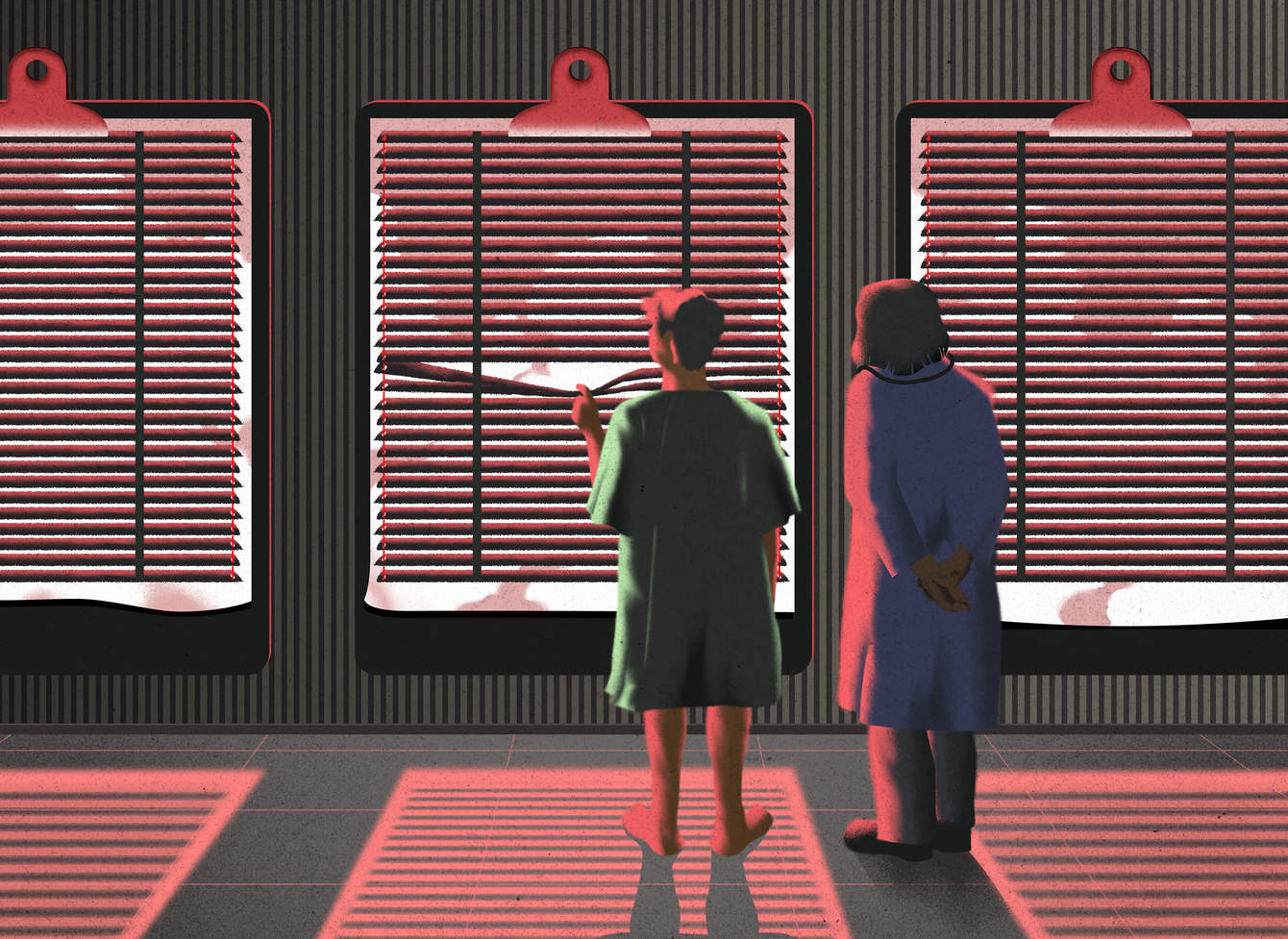
From the first symptoms to the moment doctors identify the disease, the wait can last a few days, several months, years or even decades. This period is often described as diagnostic limbo. "As a doctor, our role is to find a diagnosis that contributes to a better quality of life for the patient," explains Dr Christel Tran, medical advisor at the CHUV Centre for Rare Diseases. However, this work can be complicated. Some known diseases, such as Lyme disease and lupus, present with a wide variety of symptoms and, in this sense, can be difficult to diagnose. Others are extremely rare and therefore little known or poorly documented.
To better support its patients, the CHUV has, since 2020, operated a Centre for rare diseases that receives referrals from general practitioners or specialists, or via the French-speaking rare disease helpline, a partnership between CHUV and HUG that has been accessible to everyone since 2014, says Alessandra Strom, coordinator of the Centre. In both cases, these people often already have a long journey behind them. "I always start by telling them that I hear their suffering, that we will be meticulous in our research, but it is also possible that we do not find the origin of their ailments," explains Dr Christel Tran. This can come as a shock, as many imagine that such a centre can deliver results quickly.
Rather than starting over, the team at the Centre reviews the full history of the disease to determine the type of investigation, then selects which blood tests to perform. "Our expertise allows us to ask laboratories to conduct specific analyses that routine blood tests will not," explains Alessandra Strom. Because rare diseases are not always clearly identified and often affect more than one organ, several specialists must work in parallel on the same case and come together to share their knowledge. “For us too, the process can be very frustrating: there are patients for whom we will find a diagnosis and a treatment to offer, others for whom we will manage to determine the disease, but for whom there will be no treatment, and still others for whom we cannot reach a diagnosis," adds Alessandra Strom. In such cases, we try to reassure the person by explaining that many serious illnesses have been ruled out, which also brings some relief. All of this research requires a lot of time away from patient consultations. "But sometimes, we manage to make a diagnosis and change someone’s life," notes Dr Christel Tran. That alone makes the effort worthwhile.
The Search for a Diagnosis
Three years ago, after several decades of diagnostic limbo, Annick Boillat learned what was wrong with her two children when her eldest asked about her own situation before having children. “Malaïca, 38, and Benjamin, 35, have suffered from motor and cognitive delays since birth. I had been told their conditions were probably genetic, but because earlier tests had found nothing, I spent all those years feeling guilty, wondering what I could have done during my pregnancies. Some relatives also reinforced this belief. So, finally learning that the cause was a deficient gene that didn’t produce enough serine, an essential amino acid, was a huge relief.” She says she is particularly grateful to the Centre for Rare Diseases, which collaborated with Italian specialists to resolve this case. Her two children are now taking a substitute for this amino acid, which has improved their motor and cognitive skills. "I was obviously moved, but the whole team that had cared for them for years was just as moved," adds Annick Boillat.
Some people see their social and professional lives change from one day to the next because of the sudden onset of significant suffering. A diagnosis also provides “official recognition” from clinicians that can be presented to the employer, loved ones, or even to disability insurers. It makes a big difference, especially when the disease is invisible.
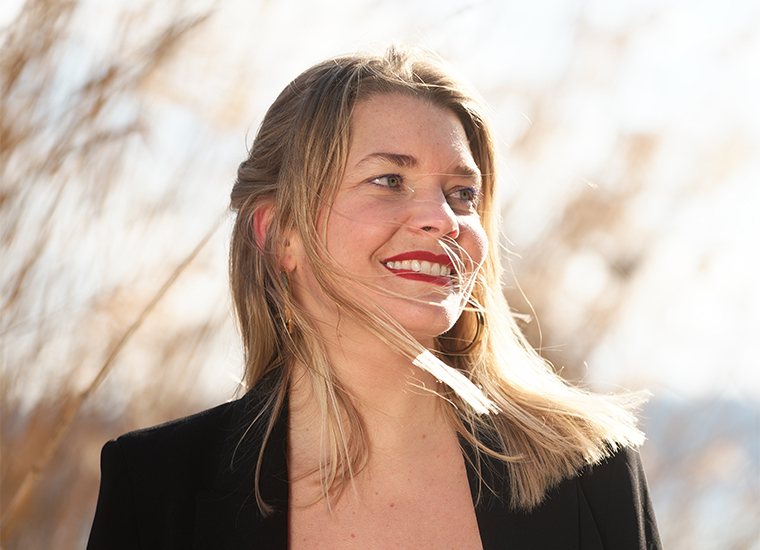
Tamara Pellegrini has been living with mal de débarquement syndrome for six years. In other words, she experiences swaying sensations that create a constant impression of being on a boat, whether in calm, moderate or rough seas, depending on the time of year. These sensations are accompanied by chronic fatigue, brain fog and cognitive difficulties. She considers herself fortunate: her search for a diagnosis took only two months. Her general practitioner took her concerns seriously, and the doctor she sees at HUG was familiar with this syndrome, having studied it specifically. Yet Pellegrini, who is in her thirties, describes the diagnosis as a real liberation. “My symptoms had become so severe that I wanted to throw myself out of the window, even though I had never had any suicidal thoughts. Even though I immediately learned that my condition was incurable, the diagnosis validated what I was feeling," she says.
Searching for Treatment
Sometimes, despite thorough investigations, including genetic analyses, and after ruling out rare diseases, no diagnosis can be made. "In this case, the person’s file leaves the Centre for Rare Diseases to return to the general practitioner," explains Alessandra Strom. This is what happened to Alma Fivaz. Her son, Samy, 23, cannot walk or speak, has coordination disorders, autistic behaviours, and epilepsy, yet still has no diagnosis.
Samy has already been the subject of four extensive genetic studies. “Each time, we are told to come back in a few years, that science will have improved. As for me, I always thought we might be missing something very simple," says Alma, who has sought training to help her manage the emotional burden and ease her worries. In a few weeks, Samy will have to undergo an operation that could treat his epilepsy, which has become uncontrollable. "There is a 50% chance it will work," explains Alma, who also hopes for a positive effect on his dyskinesia and movement disorders.
When there is no diagnosis, symptoms are treated separately by different specialists and coordinated by the general practitioner. Sometimes this works well, as with Annick’s children, whose epilepsy has been controlled and supported by speech and physiotherapy. But sometimes, as with Tamara, there is simply no treatment. For others, it’s the case of Samy: treating one symptom can aggravate the others. Therapeutic management can then be an obstacle course. “At first, I felt like the doctor didn’t listen to my daily observations. Later, when drug trials to control the epilepsy and dyskinesia proved inconclusive, as did the very standardised physical therapies, doctors no longer knew what to try," notes Alma. She then started looking for solutions abroad. "When a disease falls outside the usual categories, you have to be willing to look beyond them,” she argues.
Tamara Pellegrini, whose association, Les Invisibles, brings together those who suffer from ailments that are not physically visible, echoes this sentiment. "For many members, the journey begins in clinics, where their pain is minimised, even as daily life has become a real challenge." Exhausted, many eventually take matters into their own hands and travel in search of a diagnosis or treatment. "Sometimes, healthcare providers see this as a form of medical tourism, while in reality, these people are looking for, and sometimes find, something that brings them relief," she explains.
At the CHUV, Dr Christel Tran understands patients' need for solutions and their frustration when medicine has no answers. “We cannot offer therapies that are not scientifically proven or documented; we have a responsibility to our patients. We cannot raise hopes of results without any certainty.” This is especially true when these options are not covered by insurance and can be extremely costly. Christel Tran, on the other hand, places great emphasis on the doctor-patient partnership, which can make all the difference. “People sometimes come with information that we had overlooked. And we are always ready to follow up on leads, provided that our clinical expertise is also taken into account.”
Seeking support
Healthcare professionals also encourage people living in diagnostic limbo to seek support. At CHUV, the Centre for Rare Diseases has a psychologist to whom patients are referred when necessary. "Although we would like to be able to do this systematically, our role is really to detect rare diseases and work closely with the attending physician so that he or she can coordinate all the necessary care," explains Alessandra Strom. Psychological support is essential during periods marked by anxiety, low mood, and self-doubt. "We fall ill and often have to manage this lack of official recognition, which causes physical, mental and financial insecurity," says Pellegrini, who also points out the administrative hurdles that must be faced. "I meet a lot of people who would need the support of disability insurance, but who do not take the necessary steps because the thought of going through the process exhausts them before they even begin, so they simply force themselves to cope."
As caregivers, the mothers of Samy, Malaïca and Benjamin emphasise that they were in survival mode every day. They point out that the emotional and mental state of parents, who are asked to be alert day after day, receives little consideration. “At first, every minor health issue makes you wonder whether it is related to the disease or simply a bad cold. We wonder if the disease is degenerative,” says Alma Fivaz. "Every day is a form of emergency. There is no respite because there is no solution or any basis for comparison with other patients. Just anxiety,” says Annick Boillat. Not to mention all the administrative work they must carry out regularly.
Patient associations are also an important source of support, and some patients are referred to them, as Dr Christel Tran and Alessandra Strom note. Alma Fivaz co-founded MaRaVaud, an association that enables affected families to discuss their experiences, whether or not they have a diagnosis. Inspired by MaRaVal (Rare Diseases Valais), the association aims to encourage exchanges and pass on years of experience to young parents, making their daily lives “a little” easier. With Les Invisibles, Tamara Pellegrini pursues a similar goal by bringing together resources and tools to help members share their pain and be heard, even beyond finding lasting solutions.