
“NEW TECHNOLOGIES WILL NEVER BE ABLE TO PROVIDE HUMAN RELATIONAL SUPPORT”
Publié il y a 11 mois
12.12.2025
Partager
IN VIVO What do you think the CHUV will look like in 2050?
RALF JOX It will probably have fewer resources and be in an unfavourable economic position. Other sectors of society, such as security, will require significant funding. However, new drugs and technologies are increasingly expensive. Hospital sizes will therefore have to decrease, as hospitals represent the most expensive part of the health system. Part of care will be provided at home through telemedicine.
IV Isn’t there a risk of worsening inequalities in access to care?
RJ In times of care shortages and rationing, it will be crucial to ensure that people from minority groups have the same access to hospital care as the rest of the population.
IV You talk about rationing care. What do you mean by that?
RJ Sometimes it is necessary to prioritise certain treatments or patients at the expense of others. This was already the case during COVID-19. This type of decision may be necessary in normal times. It means defining what constitutes an emergency, how a person’s need is assessed, and whether a waiting list is the fairest solution.
IV Is there currently no prioritisation?
RJ Rarely in an explicit way. There are no official guidelines. In England, for example, the cost of a treatment is weighed against the benefit it provides. Below a certain benefit-cost ratio threshold, care is not reimbursed. It’s a political choice. In Switzerland, discussions are currently emerging at the federal level. These decisions remain difficult to accept on an individual level.
IV What ethical questions does the development of AI in medicine raise?
RJ The key question is who retains control. If something goes wrong, who is responsible? AI also raises questions about the role of doctors and caregivers. Many resources are currently invested in developing these technologies. These questions will arise very quickly; we must be ready.
IV You raised important issues. How is the hospital preparing to address them?
RJ A seminar has been organised within the CHUV to address these issues with clinicians. We also offer a course for students on the use of AI at the end of life. Today, an algorithm can predict how long a seriously ill person has left to live. But do we need to use these tools? Do patients have the right to know? These are dilemmas we must resolve.
IV How should such decisions be made?
RJ Ethics offers a range of standards and an analytical process. Today, we are trying to integrate it into the design and creation of AI algorithms. If an algorithm improves patients' well-being without introducing unfair bias, excessive risk, or social upheaval, it may be worth proposing. However, the decision on whether to use a predictive algorithm must be left to the person concerned.
IV What do you think about using a "digital twin" to support decision-making?
RJ This set of personal, biological and social data has great potential in medicine. Such a model could simulate a patient’s response to treatment and personalise their care. The biggest risk is replacing humans with their digital avatars. Doctors might be tempted to avoid tedious patient interviews by questioning the digital twin, which provides an answer in one second.
IV Do you fear the dehumanisation of medicine with the increasing use of AI?
RJ For me, human medicine essentially involves a genuine relationship between a sick person and the one who treats them. New technologies will never be able to provide human relational support. It is essential to preserve this relationship and caregivers' relational capacity. What matters is not only to offer care but also to consider how we offer it, especially when facing incurable diseases.
IV Some studies suggest that patients find AI more empathetic than caregivers.
RJ For certain very intimate issues, it may be easier to talk to a machine than to a human. The results of these studies should be a cause for concern. They reveal gaps in caregivers' skills. We receive many complaints from patients about the lack of empathy and humanity in medicine. These complaints are often related to poor communication or misunderstanding.
IV What worries you most about the years to come?
RJ I find it regrettable that there is a lack of global and collective reflection on the hospital of the future. What are our goals? What roles should be assigned to the different actors in the health system? There is no common strategy: each group advances its own interests. However, in the face of future technological and societal challenges, it is essential to anticipate these disruptions now.
BIOGRAPHY
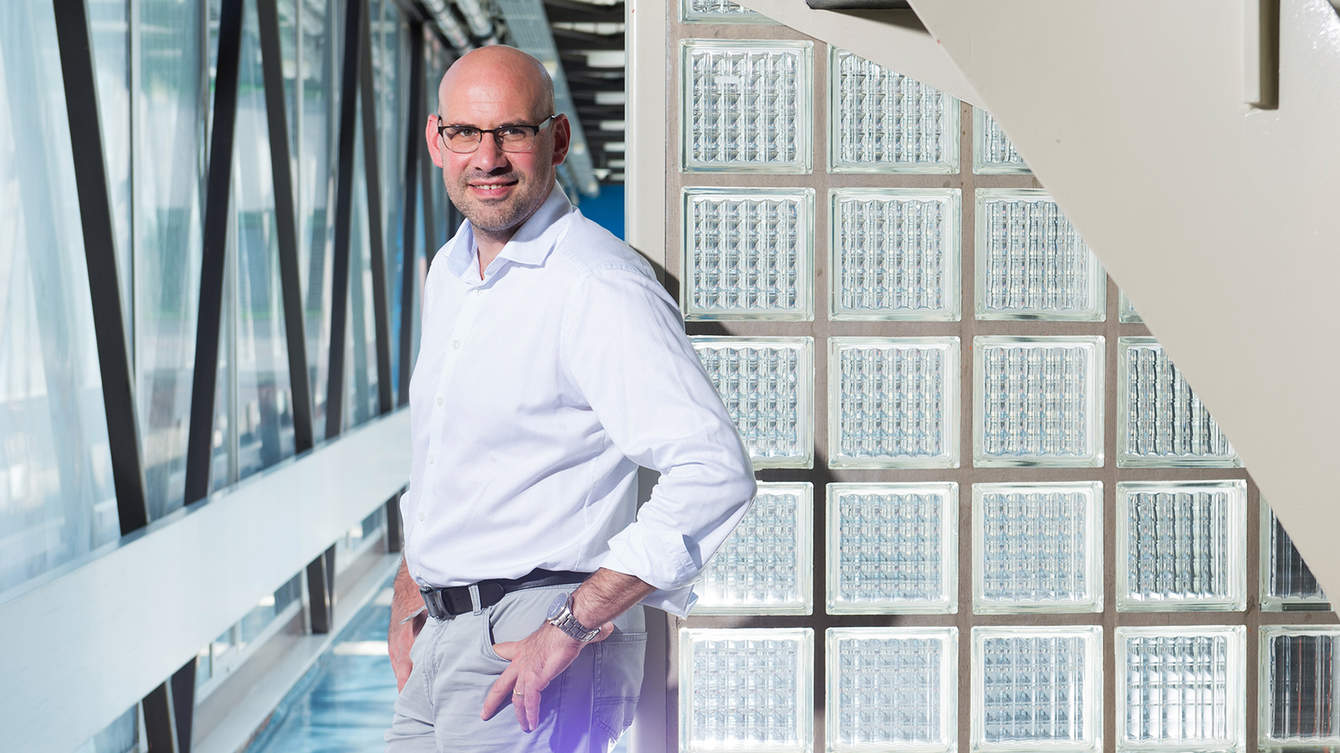
Born in 1974 in Weingarten, Germany, Ralf Jox studied medicine and philosophy before completing his training with a Master’s degree in ethics and medical law in London. He specialised in neurology while deepening his knowledge of palliative medicine. His career took him successively to Munich, Harvard and Oxford, before he settled in Lausanne in 2018. Since 2022, Ralf Jox has been leading the Institute of Humanities in Medicine at the Vaudois University Hospital Centre (CHUV).