

THE EXHAUSTING PURSUIT OF BETTER SLEEP
Publié il y a 5 mois
21.05.2026
Partager
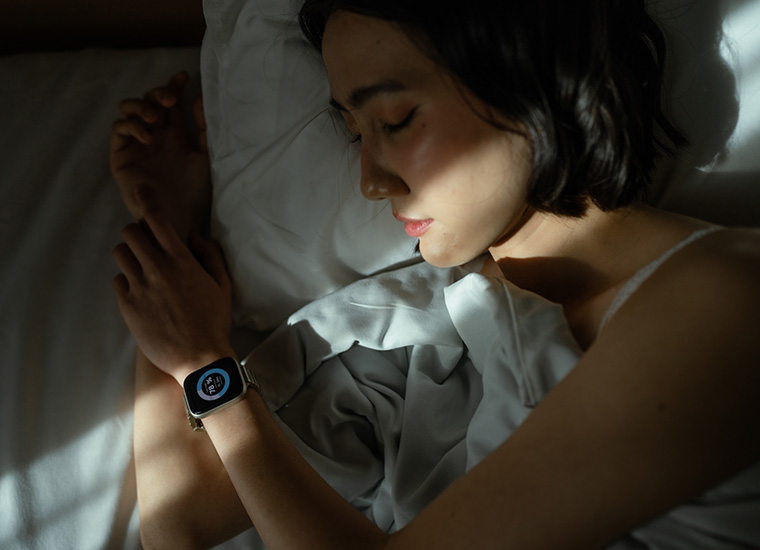
Looking at the graphs of his sleep and wakefulness phases on his smartwatch is Jonas’s first reflex when he gets up in the morning. In an RTS podcast aired in May 2021, the 35-year-old orthosomniac also reveals that he pays close attention to his evening meals, avoids exercising shortly before going to sleep, and takes his shower at a set temperature and time. The goal? To optimise the chances of a restorative night. "The problem is that the more we try to control our sleep, the less likely it is to happen," says Geoffroy Solelhac, an associate physician at the CHUV’s Centre for Investigation and Research on Sleep.
Orthosomnia involves excessive attention to sleep, particularly through strict routines and monitoring apps, to improve its quantity and quality. "For a good sleeper, adopting such habits is often useless but, in general, does not pose any problem," says the specialist. However, for someone who already suffers from a disorder such as insomnia, wanting to control and measure their sleep in this way often aggravates the situation. It is a vicious circle: trackers can further reinforce patients' attention on what already constitutes a source of stress and anxiety, namely, difficulties falling asleep and nocturnal awakenings
Sleepmaxxing
Although mentioned in scientific articles, orthosomnia is not recognised as a disorder in official classifications. It is part of a societal trend towards quantifying and optimising performance and longevity, which also extends to sleep. “A category of insomniac patients has a very full life and expects to fall asleep immediately after lying down to perform as many activities as possible. Yet the brain does not have an "on-off" button to instantly switch from wakefulness to sleep. There are fundamental transition phases between these two states. This lack of knowledge about brain function among the population can generate a lot of frustration," explains Tifenn Raffray, psychiatrist-psychotherapist and co-medical director of the Florimont Sleep Centre in Lausanne.
Although the phenomenon is not new, it is now amplified by social networks. Tens of millions of posts featuring the hashtag "sleepmaxxing" promote contested practices with no medical basis, such as taping your mouth shut, bingeing on kiwis, taking melatonin supplements, or swinging suspended by the neck to optimise your sleep. "These techniques have no scientific evidence, and some even seem dangerous," says Geoffroy Solelhac. Tifenn Raffray explains: “It is more a question of reconsidering the value placed on sleep in our societies. Teenagers, for example, are biologically programmed to go to bed and wake up late. Delaying the start of classes or work in the morning would prevent people from suffering a sleep deficit at an early age, which would also have a very positive impact on mental health.”
"The brain does not have an "on-off" button to instantly switch from wakefulness to sleep. There are fundamental transition phases between these two states. This lack of knowledge about brain function among the population can generate a lot of frustration,"
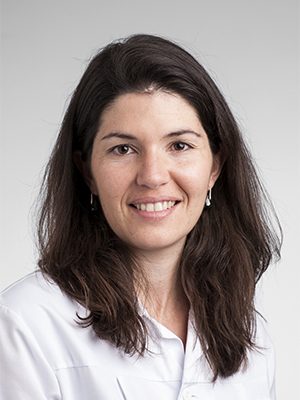
Tifenn Raffray is psychiatrist-psychotherapist and co-medical director of the Florimont Sleep Centre in Lausanne.
Sleep diary
Nearly a third of the Swiss population suffers from sleep disorders, either moderately (26%) or pathologically (7%). For insomnia, whether or not it is worsened by orthosomnia, CBT-I — cognitive behavioural therapy for insomnia — is considered the most effective treatment, with a success rate of 70% to 80%. It consists of psychotherapeutic support delivered over three to eight sessions. Patients keep a seven- to fifteen-day sleep diary, recording bedtime, estimated sleep time, state upon waking, and daytime functioning. "The most accurate way to assess sleep quantity and quality is through subjective experience. That is why patients' entries in a sleep diary are the most reliable measure of it," explains Geoffroy Solelhac.
In Switzerland, only 1% of patients benefit from CBT-I, according to a 2020 study in the Journal of Sleep Research. "Many doctors do not know this treatment or whom to refer their patients to," regrets Raffray. The number of therapists trained in CBT-I is also far too low. This situation explains the long periods of trial and error and the persistently high rate of prescriptions for sleeping pills. "Given the scale of the problem, political support would be needed to remedy these shortcomings."
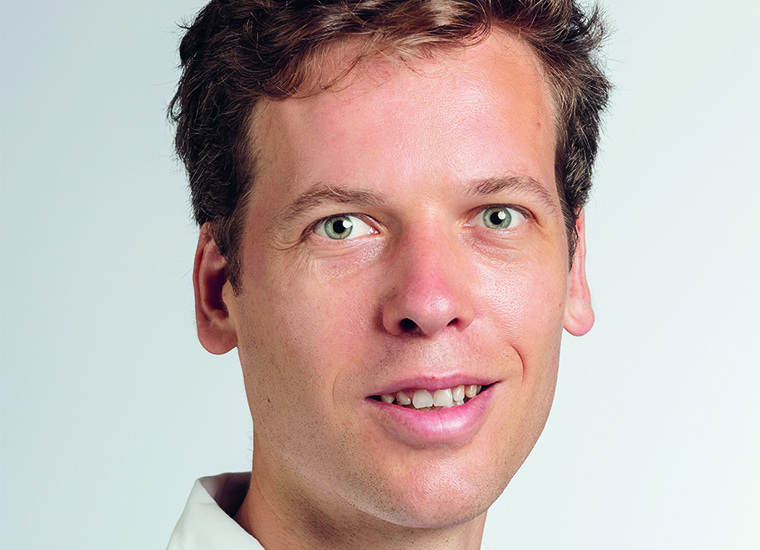
3 Questions for Geoffroy Solelhac
IV Cognitive behavioural therapy (CBT-I) involves restricting time in bed. Isn’t that counterintuitive?
GEOFFROY SOLELHAC Insomnia can be considered an awakening disorder: these patients spend a lot of time in bed without sleeping. The aim is therefore to recover a continuous sleep block by limiting the time spent in bed to the time we are asleep, without focusing on a specific amount of sleep. This process will make the patients drowsy and significantly improve the quality of their sleep. Sleep duration is addressed later.
IV A study reveals that people with sleep disorders sleep better than they realise. How can this be explained?
GS In cases of insomnia, people often sleep longer than they realise. However, very detailed analyses of the electroencephalogram, for example, show that their sleep is different and impaired compared with that of good sleepers, despite a similar sleep duration. These people present a hyperarousal state that can be measured through various parameters. Their subjective experience, therefore, remains the most important factor in assessing their sleep in the clinic.
IV What are the best tips for ensuring good-quality sleep?
GS Get up at a set time, even on weekends; expose yourself to daylight in the morning; exercise regularly; go to bed when you feel drowsy, not before, and reserve the bed for sleep only. I also recommend keeping the room temperature between 17 and 18 degrees in winter, keeping the sleep area quiet, and allowing yourself a moment to decompress in the evening without screens.