
![[Translate to Anglais:]](https://www.invivomagazine.ch/fileadmin/_processed_/7/6/csm_320A9724-Modifier_59ec6abbed.jpg "[Translate to Anglais:]")
“Operating on two people at the same time is a major challenge”
Publié il y a 9 mois
24.09.2025
Partager
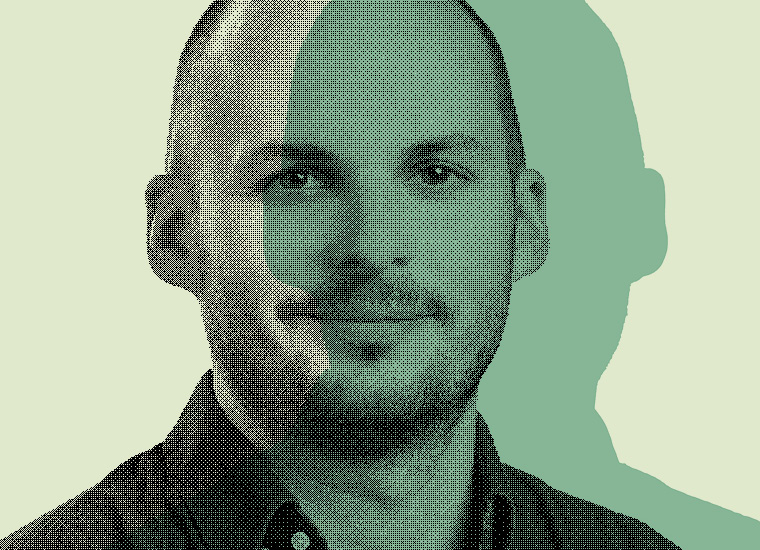
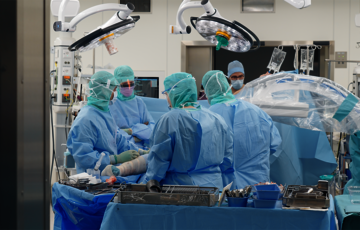
The operation to separate the conjoined twins, Marie and Grace, took place in Côte d'Ivoire in December. Adrien De Cock, an executive doctor in the CHUV's Anesthesiology Department, participated in this extraordinary procedure. As part of a collaboration with an Ivorian reference institution in this field for the NGO La Chaîne de l'Espoir, he supervised the anaesthesia component of the intervention.
IN VIVO Adrien De Cock, what was your role during the operation?
Adrien De Cock My job was to supervise the local team in collaboration with Professor Christophe Chardot, surgeon at the Necker-Enfants Malades hospital in Paris. There were two teams, one for each child. To avoid any confusion, a colour code was set up to distinguish Marie from Grace. With Christophe Chardot, we were the only ones able to switch between the two to ensure the overall vision and facilitate collaboration and synchronisation between the two teams. In particular, I acted as the link between the two anaesthetists to ensure information was shared effectively and vital signs were maintained throughout the procedure. It required immense effort to concentrate and not confuse the information related to one child or the other.
IV Operating on two people simultaneously is extremely rare. How is it logistically possible?
ADC It’s a big challenge. The operating room was not designed for two simultaneous procedures. In addition to the staff, we had to duplicate the equipment. For example, the anaesthesia machines each had two infusion pumps. There were a lot of tubes. The ergonomics had to be carefully planned so the staff could move around safely. It required meticulous organisation and extensive simulations beforehand. The room was set up several times for training. Indeed, during the operation, we had to ensure we never crossed the cables.
IV How did you experience this operation?
ADC It was extraordinary to take part in such a rare intervention. It was a first in Côte d'Ivoire. Entering the room with these conjoined babies and leaving with the two, now totally independent of each other, and handing them over to their parents was a deeply emotional moment. After so many hours of concentration, there was an explosion of joy once the operation ended. We all hugged. During such a procedure, you go through a whole range of emotions. There are phases of high stress. Faced with the technical challenge, we doubted our ability to succeed at one point.
IV What was this technical challenge?
ADC The two sisters were connected by the abdomen, but fortunately each had all their organs. Thanks to preoperative preparation, we knew they shared bowel segments, but the extent of the entanglement was unknown. No scanner, ultrasound or examination can determine this with certainty beforehand. During the surgery, we observed the extent and complexity of the intestinal fusion. It took the surgeon three hours to decide exactly where to cut. This is why the operation lasted 17 hours instead of the 6 hours initially planned.
IV How did you collaborate with the local team?
ADC This is a long-standing collaboration. I have been volunteering with La Chaîne de l'Espoir, a hospital in Côte d'Ivoire that serves as a reference centre for paediatric surgery, since 2018. With Christophe Chardot, our role is to support the Ivorian team and teach them complex procedures. We go there once or twice a year and see the enormous progress made over the past seven years. It was great to perform the operation with this team; all the credit goes to them.
IV Is it possible, in complex cases, to repatriate the children to Europe to perform certain procedures?
ADC CIt is, of course, an option, but it is not our preferred option. Transferring the child to Europe is much more expensive and does not improve the local teams' experience, which is essential. Moreover, the family can be with their child, even though this is often not possible during a transfer.
IV After the operation, the post-operative phase begins. What risks are involved?
ADC There are often complications, as recovery from such an intervention is long and difficult. Infections are the most common risks. For one of the twins, it was unfortunately fatal. It saddens me deeply. She had an intestinal suture that was struggling to heal. I had many calls with the Ivorian team to assess the situation. Unfortunately, she died of sepsis last April, four months after the operation. Even though we know this risk exists, it’s still devastating news.
IV How is her sister doing?
ADC She is doing well. We’re very lucky, as she had contracted severe post-operative pneumonia. Today, apart from her abdominal scar, nothing suggests that she was a conjoined twin a few months ago.
A rare phenomenon
Cases of Siamese twins are very rare, occurring in about one in 100,000 pregnancies worldwide. Conjoined twins arise from a single fertilised egg. In an ordinary twin pregnancy, this egg splits into two within the first few days after fertilisation, giving rise to one or two placentas and one or two pockets of water. However, in very rare cases, the split is incomplete. From the 13th day, the body parts of the two foetuses can bond. This phenomenon is more frequent in Asia and Africa and affects girls three times as often, but we are unable to explain the cause. In Western countries, close monitoring of pregnancies reduces the number of cases. In Switzerland, there have been three cases of Siamese twins operated on in 40 years.