


How Cannabis Can Trigger Schizophrenia
Publié il y a 3 mois
03.07.2026
Partager

The effects of cannabis on mental health are now well documented. A 2024 study shows that regular use before the age of 14 can increase the risk of developing psychosis (see box). "Schizophrenia is not a homogeneous disease linked to a single neurobiological mechanism; it is defined by the presence of certain symptoms that can emerge in the context of various abnormalities of brain function," explains Professor Philippe Conus, head of the Psychiatry Department at CHUV. Schizophrenia is a form of psychosis, a group of disorders that impair contact with reality, and its expression varies from one person to another. Schizophrenia affects 1% to 2% of the population.
The disorder is characterised by so-called "positive" symptoms, such as delusions, hallucinations – often auditory – and disorganised thinking. To these are added so-called "negative" symptoms, such as loss of motivation, social withdrawal, and difficulty in experiencing pleasure. Schizophrenia is also associated with cognitive impairment, which is often the most disabling. Cognition allows us to receive signals, organise them, and give them meaning. When it is impaired, social interactions and the ability to perform complex tasks suffer greatly, says the specialist.
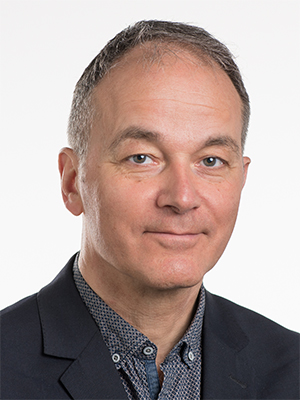
“In most cases, brief treatment is sufficient. By consulting quickly, it is easier to find ways to solve the problem. We need a democratisation of consultations to understand where the trouble comes from and act quickly: it is important,” says Professor Philippe Conus, head of the Psychiatry Department at CHUV.
Cannabis, a triggering factor
Cannabis use can, in itself, cause hallucinations, depersonalisation, or ‘bad trips’ – but not for everyone. “We are not all equal when it comes to the effects of cannabis; some people overreact, while others experience fewer effects.”
The link between cannabis and schizophrenia is now established. "Cannabis clearly has an aggravating effect: it increases or maintains symptoms in people with psychosis," explains Philippe Conus. But it can also play a role earlier in the process. For someone at risk of developing schizophrenia (e.g. family history), cannabis use may be the triggering factor.
Finally, population-based studies show that young people who start using cannabis between the ages of 12 and 14 are four times more likely to develop a psychotic disorder. The adolescent brain undergoes major reorganisation. "At this age, the brain has a certain flexibility in neural connections; an increase in dopamine or the effect of cannabis can interfere with the smooth running of this important reorganisation and contribute to the emergence of a psychotic disorder." Cannabis can therefore disrupt a balance that is still fragile and developing. "Before the age of 18, the causal link between cannabis use and schizophrenia is much clearer; it is no longer found in the same way among those who start smoking later."
Beyond age, other factors come into play. The genetic component is also important, as are exposure to trauma, violence, sexual and physical abuse, and even abandonment, which are risk factors. These factors create a vulnerability on which cannabis can act as a trigger.
“I didn’t think it could break so much”
“I started smoking little by little in my twenties. With roommates, it became a daily habit: a joint on the way home, sometimes more.” During his studies in literature and digital humanities, everything went well. But with COVID, isolation took hold. "I started smoking more and more. My mental health plummeted." He went through a period of depression, consulting several specialists, but was unable to stop smoking.
The situation became fragile. While on sick leave, he found himself unemployed. "I became very anxious, demotivated, and stressed." In 2024, he experienced a psychotic episode. "My brain could no longer distinguish reality from my delusions. I thought I was being spied on, in danger, and that people were trying to contact me by phone. The autocorrect on my phone reminded me of hidden messages.”
Rebuilding would take time. "Getting back on my feet took me a year and a half." At the CHUV, drug treatments are gradually adjusted. Above all, human support has made the difference. "Regular appointments, someone to talk to, and comprehensive support." Naturally anxious, he describes an "existential anxiety" linked to living alone, unemployment and his lack of activity. "Hearing 'it will get better' was a great relief." His time at the Midwifery Institute – a place of care and activities for adolescents and young adults with mental disorders – also helped him regain a rhythm.
With hindsight, he admits he was aware of the risks. "But as with other addictions, it’s irrational. I didn’t think it could do so much damage. Today, my mind is much clearer and I have more energy. My life has regained its colour." After occasionally resmoking, he stopped using cannabis altogether. “I felt morally opposed to starting again. Now I’m done with that, and so much the better!”
*Pseudonym
Identifying warning signs
It is possible to detect certain high-risk mental states. "These may be young people who have mild symptoms such as odd perceptions, slowed thinking, anxiety, and depression." In such contexts, specialised programmes offer appropriate preventive care. "Psychological or neuroprotective approaches – such as the prescription of omega-3 – are being studied and seem to slow or prevent the development of the disorder."
For Philippe Conus, young people’s awareness of the risks of cannabis remains insufficient. He advocates a simple, guilt-free, reality-based message: avoid early cannabis use; be attentive to unusual reactions, such as paranoia or malaise; and seek help if you feel your cannabis use is becoming a need. Psychiatric therapy is particularly effective in addressing this problem. "In most cases, brief treatment is sufficient. By consulting quickly, it is easier to find ways to solve the problem. We need a democratisation of consultations to understand where the trouble comes from and act quickly: it is important. Otherwise, the situation may worsen and require longer, more complex treatments. The brain is a complex organ. Around half the population will experience a mental health disorder at some point in their lives. The sooner we deal with it, the better we understand its causes and the greater the chance of recovery.”
Places of contact
Consultations de Chauderon
Les Consultations de Chauderon are part of the Department of General Psychiatry and provide specialised assessments, follow-up and care for adults aged 18 to 65 with various mental disorders.
Place Chauderon 18, 1003 Lausanne, Reception desk: 5th floor
Tel. 021 314 00 50, Mon-Fri: 08:00 18:00
TIPP Programme – Treatment and Early Intervention in Psychotic Disorders
At the Consultations de Chauderon, a specialised outpatient programme of the General Psychiatry Service dedicated to the detection and early intervention for psychotic disorders, it is aimed at young adults aged 18 to 35.
Place Chauderon 18, 1003 Lausanne
Tel. 021 314 00 50
Consultation of the Centre, ERA Unit - Psychotic Risk Assessment Unit in Adolescence
L’ERA fait partie du Service universitaire de psychiatrie de l’enfant et de l’adolescent. L’unité est spécialisée dans la détection précoce des patient-es à risque de psychose parmi les jeunes de 12 à 18 ans.
Avenue d'Echallens 9, 1004 Lausanne
Tel: 021 314 44 35


How Cannabis Can Trigger Schizophrenia
Publié il y a 3 mois
03.07.2026
Partager
The effects of cannabis on mental health are now well documented. A 2024 study shows that regular use before the age of 14 can increase the risk of developing psychosis (see box). "Schizophrenia is not a homogeneous disease linked to a single neurobiological mechanism; it is defined by the presence of certain symptoms that can emerge in the context of various abnormalities of brain function," explains Professor Philippe Conus, head of the Psychiatry Department at CHUV. Schizophrenia is a form of psychosis, a group of disorders that impair contact with reality, and its expression varies from one person to another. Schizophrenia affects 1% to 2% of the population.
The disorder is characterised by so-called "positive" symptoms, such as delusions, hallucinations – often auditory – and disorganised thinking. To these are added so-called "negative" symptoms, such as loss of motivation, social withdrawal, and difficulty in experiencing pleasure. Schizophrenia is also associated with cognitive impairment, which is often the most disabling. Cognition allows us to receive signals, organise them, and give them meaning. When it is impaired, social interactions and the ability to perform complex tasks suffer greatly, says the specialist.
“In most cases, brief treatment is sufficient. By consulting quickly, it is easier to find ways to solve the problem. We need a democratisation of consultations to understand where the trouble comes from and act quickly: it is important,” says Professor Philippe Conus, head of the Psychiatry Department at CHUV.
Cannabis, a triggering factor
Cannabis use can, in itself, cause hallucinations, depersonalisation, or ‘bad trips’ – but not for everyone. “We are not all equal when it comes to the effects of cannabis; some people overreact, while others experience fewer effects.”
The link between cannabis and schizophrenia is now established. "Cannabis clearly has an aggravating effect: it increases or maintains symptoms in people with psychosis," explains Philippe Conus. But it can also play a role earlier in the process. For someone at risk of developing schizophrenia (e.g. family history), cannabis use may be the triggering factor.
Finally, population-based studies show that young people who start using cannabis between the ages of 12 and 14 are four times more likely to develop a psychotic disorder. The adolescent brain undergoes major reorganisation. "At this age, the brain has a certain flexibility in neural connections; an increase in dopamine or the effect of cannabis can interfere with the smooth running of this important reorganisation and contribute to the emergence of a psychotic disorder." Cannabis can therefore disrupt a balance that is still fragile and developing. "Before the age of 18, the causal link between cannabis use and schizophrenia is much clearer; it is no longer found in the same way among those who start smoking later."
Beyond age, other factors come into play. The genetic component is also important, as are exposure to trauma, violence, sexual and physical abuse, and even abandonment, which are risk factors. These factors create a vulnerability on which cannabis can act as a trigger.
“I didn’t think it could break so much”
“I started smoking little by little in my twenties. With roommates, it became a daily habit: a joint on the way home, sometimes more.” During his studies in literature and digital humanities, everything went well. But with COVID, isolation took hold. "I started smoking more and more. My mental health plummeted." He went through a period of depression, consulting several specialists, but was unable to stop smoking.
The situation became fragile. While on sick leave, he found himself unemployed. "I became very anxious, demotivated, and stressed." In 2024, he experienced a psychotic episode. "My brain could no longer distinguish reality from my delusions. I thought I was being spied on, in danger, and that people were trying to contact me by phone. The autocorrect on my phone reminded me of hidden messages.”
Rebuilding would take time. "Getting back on my feet took me a year and a half." At the CHUV, drug treatments are gradually adjusted. Above all, human support has made the difference. "Regular appointments, someone to talk to, and comprehensive support." Naturally anxious, he describes an "existential anxiety" linked to living alone, unemployment and his lack of activity. "Hearing 'it will get better' was a great relief." His time at the Midwifery Institute – a place of care and activities for adolescents and young adults with mental disorders – also helped him regain a rhythm.
With hindsight, he admits he was aware of the risks. "But as with other addictions, it’s irrational. I didn’t think it could do so much damage. Today, my mind is much clearer and I have more energy. My life has regained its colour." After occasionally resmoking, he stopped using cannabis altogether. “I felt morally opposed to starting again. Now I’m done with that, and so much the better!”
*Pseudonym
Identifying warning signs
It is possible to detect certain high-risk mental states. "These may be young people who have mild symptoms such as odd perceptions, slowed thinking, anxiety, and depression." In such contexts, specialised programmes offer appropriate preventive care. "Psychological or neuroprotective approaches – such as the prescription of omega-3 – are being studied and seem to slow or prevent the development of the disorder."
For Philippe Conus, young people’s awareness of the risks of cannabis remains insufficient. He advocates a simple, guilt-free, reality-based message: avoid early cannabis use; be attentive to unusual reactions, such as paranoia or malaise; and seek help if you feel your cannabis use is becoming a need. Psychiatric therapy is particularly effective in addressing this problem. "In most cases, brief treatment is sufficient. By consulting quickly, it is easier to find ways to solve the problem. We need a democratisation of consultations to understand where the trouble comes from and act quickly: it is important. Otherwise, the situation may worsen and require longer, more complex treatments. The brain is a complex organ. Around half the population will experience a mental health disorder at some point in their lives. The sooner we deal with it, the better we understand its causes and the greater the chance of recovery.”
Places of contact
Consultations de Chauderon
Les Consultations de Chauderon are part of the Department of General Psychiatry and provide specialised assessments, follow-up and care for adults aged 18 to 65 with various mental disorders.
Place Chauderon 18, 1003 Lausanne, Reception desk: 5th floor
Tel. 021 314 00 50, Mon-Fri: 08:00 18:00
TIPP Programme – Treatment and Early Intervention in Psychotic Disorders
At the Consultations de Chauderon, a specialised outpatient programme of the General Psychiatry Service dedicated to the detection and early intervention for psychotic disorders, it is aimed at young adults aged 18 to 35.
Place Chauderon 18, 1003 Lausanne
Tel. 021 314 00 50
Consultation of the Centre, ERA Unit - Psychotic Risk Assessment Unit in Adolescence
L’ERA fait partie du Service universitaire de psychiatrie de l’enfant et de l’adolescent. L’unité est spécialisée dans la détection précoce des patient-es à risque de psychose parmi les jeunes de 12 à 18 ans.