

“Without prize money, there is no incentive to use banned substances.”
Publié il y a 8 mois
20.02.2026
Partager
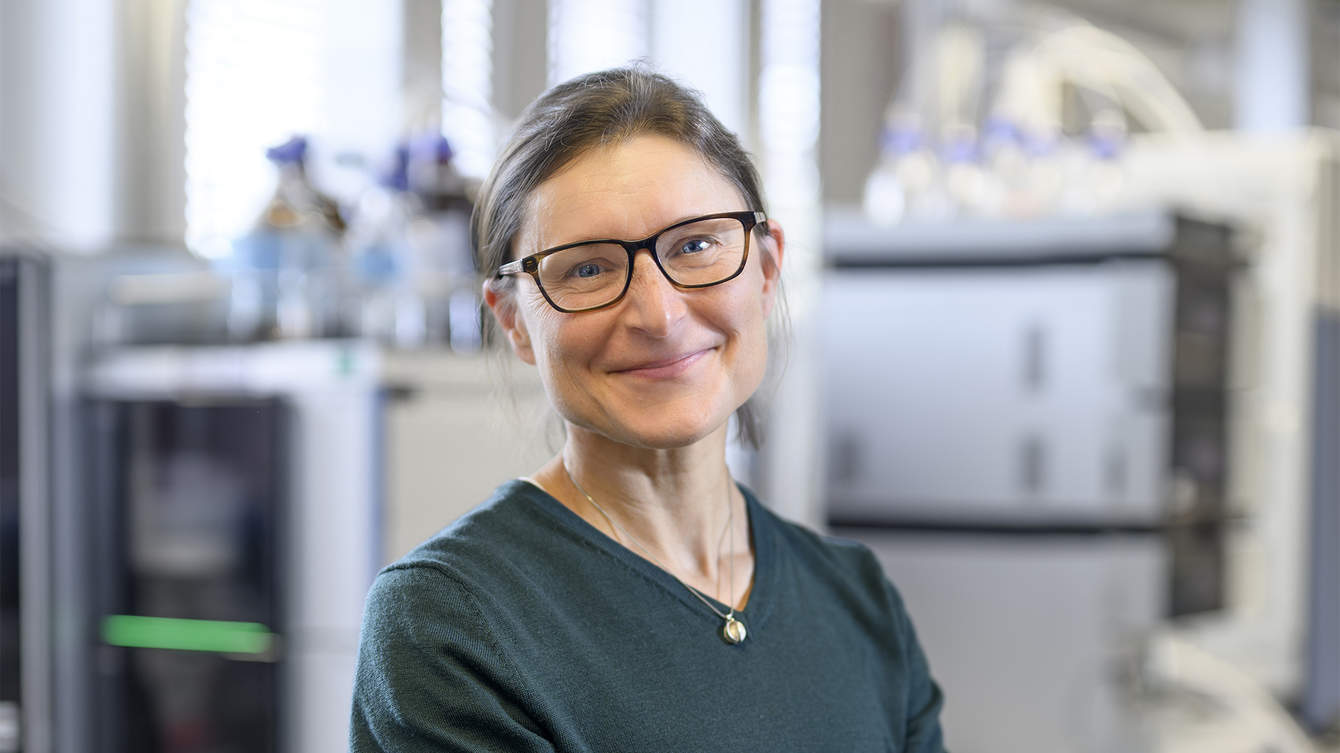
Of the 20,000 urine and blood samples analysed each year by the Swiss Laboratory for Doping Analyses (LAD), only the athlete’s gender and sport discipline are known. These anonymous vials contain valuable information that can influence a career. One of thirty laboratories worldwide accredited by the World Anti-Doping Agency (WADA), the LAD and its thirty collaborators are at the heart of ethical and public health issues that agitate the world of high-level sport, which is constantly seeking new records. In 2025, the LAD celebrates its 35th anniversary.
IN VIVO How do we define doping today? Who decides what counts as a doping substance?
TIIA KUURANNE For a substance to be included in the WADA list of prohibited substances, it must meet at least two of the following three criteria: does it improve an athlete’s sporting performance? Does it pose a risk to the person who ingests it? And finally, a more philosophical criterion that may vary by interpretation: "Is this contrary to the spirit of sport?" The Agency’s list is enriched every year with new compounds, which total several hundred in 2025.
IV You have been leading the LAD for ten years: what are the major developments you have had to contend with?
TK From our laboratory's perspective, the diversity and volume of blood sample analyses have increased markedly. Transporting samples remains a challenge because of their fragility. For urine samples, we now have powerful instruments that can detect very low concentrations. Thus, in some cases, molecules of the substances can be detected several months after administration, which was previously impossible. The LAD is also a pioneer of the Athlete Biological Passport, introduced in 2014 and has become a central tool of the global anti-doping strategy. Rather than directly testing for prohibited substances, it monitors an athlete's biological parameters over an extended period to identify anomalies indicative of doping.
“ANTI-DOPING ORGANISATIONS AND AUTHORITIES HAVE A RESPONSIBILITY TO EDUCATE YOUNG PEOPLE TO AVOID UNINTENTIONAL DOPING.”
IV Do you feel the pressure on the LAD has intensified over the years?
TK Yes, we must always be at the forefront of anti-doping programmes, continually enhance our expertise, and respond promptly.
IV Have you observed any changes among the people tested, for example, in terms of gender, age or sport?
TK Testing strategies are developed by anti-doping organisations, i.e., sports bodies and national anti-doping organisations. According to WADA’s annual report, male athletes are generally tested more frequently than female athletes. In terms of age, the strategy could focus on young athletes and their education, athletes nearing the end of their careers who are tempted to secure one last contract, or athletes returning from long-term injuries. When a record appears out of nowhere, or an improvement in performance is too fast, we can launch an investigation. The strategy is not disclosed to the laboratory, which focuses on providing services requested by anti-doping organisations on anonymous samples.
IV What forms of doping still slip through the cracks?
TK All so-called endogenous substances, i.e., substances naturally produced by the organism, which can also be administered artificially to increase their concentrations beyond normal physiological levels. This includes testosterone, erythropoietin (EPO), a natural hormone produced in the kidneys that increases the blood’s oxygen-carrying capacity, and growth hormone. Values vary from one individual to another and depend, in particular, on the time of day, menstrual cycle, medication, stress, and diet. The Biological Passport and longitudinal sample analysis can detect anomalies. When individual tolerance limits are exceeded, we recommend a control strategy or additional analyses.
IV Overall, is doping more widespread than before?
TK The percentage of samples testing positive has remained steady at 1-2% over the years. This may seem low, but out of 250,000 tests conducted worldwide each year, it represents several thousand athletes. If we look at society as a whole, yes, medication use has increased significantly.
IV In an interview with the newspaper Le Temps in 2016, you emphasised the importance of prevention in the fight against doping. Almost ten years later, where do things stand?
TK Anti-doping organisations and authorities have a responsibility to educate young people, in particular, to avoid what might be called “unintentional doping”. This refers to cases in which an athlete tests positive due to insufficient information or without concrete evidence of a doping offence. I am thinking in particular of food supplements bought on the black market, or of failing to mention that one practises a sport professionally to one's primary care physician, who prescribes medications. Thanks to our instruments, we can now detect very low concentrations. The issue lies in the interpretation of the results: was it intentional or not?
IV Beyond scientific analysis, what role can a laboratory like yours play in prevention?
TK Our role is to provide reliable results and contribute to continuous improvement through research. The world is changing; we live in an increasingly medicalised society, as evidenced by water analyses detecting metabolic products, such as oestrogens.
IV What about the health consequences?
TK It depends on the dose and route of administration. Injections could be more dangerous than oral intake. The worst-case scenario is buying products on the black market. Here, I am not only talking about professional athletes, who represent a small fraction of the population, but also amateurs who take risks.
IV Do you observe any pressure to dope?
TK Without prize money, there is no incentive to use banned substances. And today, for some sports, the financial stakes are enormous. That creates pressure, yes. And then it’s human to always want to push the limits. The public expects records. It’s a general attitude.
IV In some developing countries, financial rewards can push athletes to take illicit substances, especially when controls are not uniform. How do you view these inequalities?
TK Inequalities between athletes are a reality. The stakes are indeed different when the prospect is to improve one’s situation and that of one's family if one wins a marathon. All I can wish for is that athletes make independent decisions, and that some countries are freer to do so than others.
IV In 2026, the Enhanced Games, also known as the “Doped Games”, will be held in Las Vegas. Do you fear for your job?
TK If the general public is interested in these Enhanced Games, I have nothing to say. But I am not sure we are heading in the right direction. Once again, we need to assess whether it is a personal choice and whether athletes who use these substances are aware of the health risks.
IV Do you believe a “clean” sport can really exist?
TK Obviously, otherwise I wouldn’t come to work at the lab every day. We put a lot of the spotlight on athletes who dope, but we must not forget those who do not dope and who must be protected. That is also our mission.
BIOGRAPHY
Originally from Finland, Tiia Kuuranne moved to Lausanne in 2016 to take over the management of the Swiss Laboratory for Doping Analyses (LAD), which has around thirty employees. Aside from her work, the pharmaceutical chemistry graduate plays the cello and finds escape in classical music whenever she can.