

Detecting stress through the voice
Publié il y a 1 an
09.10.2025
Partager
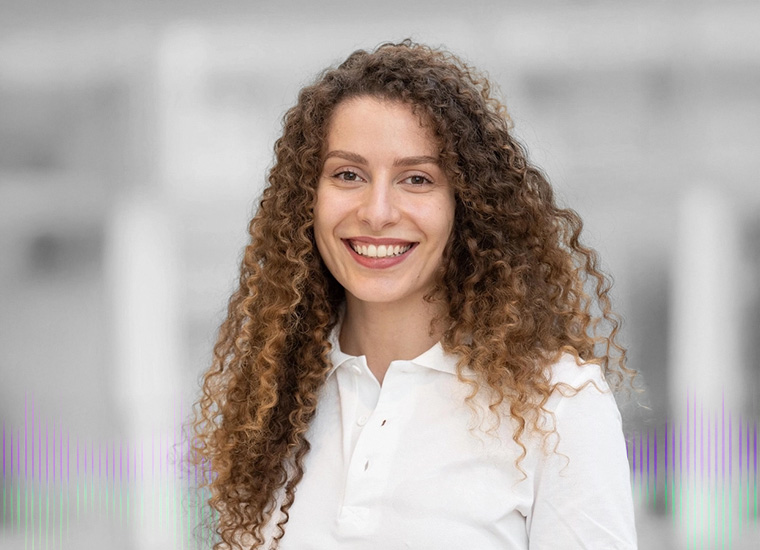
What if our voice could reveal our health status? This is the question asked by Lara Gervaise, who completed a master’s degree in robotics and data science at EPFL. “I wanted to make something objective that wasn’t necessarily so: our well-being”, she says. Working with psychiatrists from the CHUV and specialists in behavioural sciences, she listed the indicators of stress, anxiety, or depression and how to measure them. After identifying our voice as the most effective predictor of well-being, she decided to train an artificial intelligence model on these bases. This led to the creation of Virtuosis, a company specialising in the analysis of vocal biomarkers.
A potential for early detection
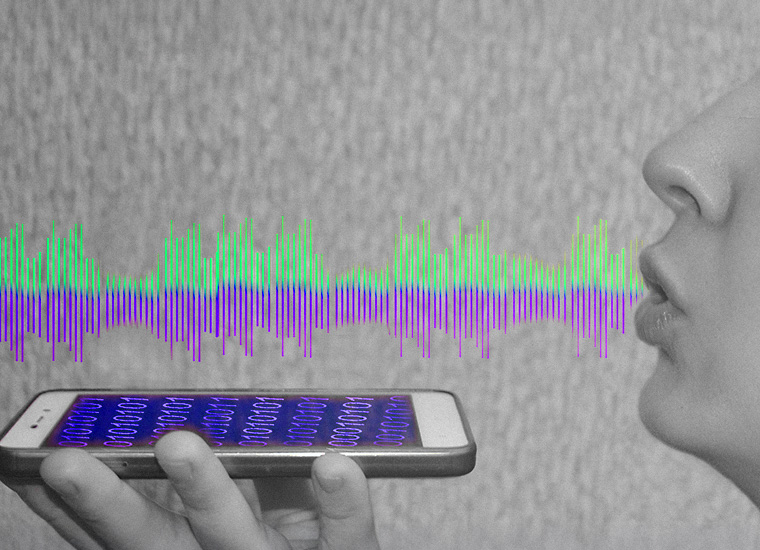
It only requires a 30-second voice sample. The content itself does not matter, because the software only considers the form by analysing the flow, rhythm, intonation, breaths, and pauses. These elements act as biomarkers that inform the state of a person's mental, cognitive, respiratory, or cardiovascular health. This system can thus detect diseases, but does not replace a medical diagnosis. "It is a clinical decision-support tool, which makes it possible to complete tools such as scanners or blood tests," says Lara Gervaise, co-founder of Virtuosis. “Then, it is the doctor who establishes the diagnosis.”
Since last September, the University Hospitals of Geneva (HUG) have been using it as part of teleconsultations to identify psychological problems. In Canada, the Montfort hospital uses it to monitor the progression of Parkinson’s disease. South Korea is interested in it to monitor cognitive decline and Alzheimer’s disease. In the canton of Vaud, it could be used to detect ill-being and mental disorders among elderly people receiving home care services.
Preventing burnout in the workplace
The tool developed by Lara Gervaise also plays a decisive role in prevention. “In business, this technology can also be used to prevent exhaustion at work.” A major issue, since 30% of active people report suffering from a critical level of stress, according to the Job Stress Index 2022. “The software can be integrated into a video conferencing service or is accessible via an app.” This technology allows employees to receive individualised feedback on their state of tiredness, stress or anxiety. The analysis is only possible if the individual records a voice sample, and it is impossible for the employer to access employees' personal data. Two fundamental limits that act as safeguards against surveillance risk.”
For Lara Gervaise, Virtuosis must enable companies to ensure employees' well-being without compromising confidentiality. “That’s why HR only has access to collective and anonymous data. For example, they can know the stress results for their employees aged 30-45 who work on a given site, or select only women or men. But for fewer than 30 people, the data will not show. As such, it is impossible to know the health status of a specific employee," she says. Based on this collective data, the company can then propose preventive measures, such as taking more breaks, engaging in meditation sessions, or consulting internal or external specialists. Studies are currently being conducted to measure the impact of this early detection of burnout in the workplace, and the effectiveness of prevention measures proposed by employers.