

Dystonia: Living with Involuntary Muscle Contractions
Publié il y a 8 mois
06.03.2026
Partager
A leg or an arm that moves against its owner’s will. A limb that remains rigid, twists due to contraction, or causes pain. This is everyday life for individuals affected by dystonia. In Switzerland, nearly 8,000 people are affected, according to Dystonia-Info, the Swiss association for patients living with this disorder.
Since childhood, Sophia Mohn has experienced episodes of involuntary contractions in the right shoulder. For years, these movements remained sporadic, occurring during stressful events. At the beginning of high school, the episodes intensified. “My right shoulder tensed frequently, as did my right hip. I had trouble walking; I was bent forward, and by the evening, I had pains everywhere from the contractions. Sometimes my neck would tense, and I would have trouble breathing. Everything was complicated: when I was writing or eating, I had to take breaks so I wouldn't hurt too much.”
Concretely, dystonia is defined as "sustained muscle contraction," explains Julien Bally, assistant doctor in charge of the Abnormal Movements Unit at the Neurology Service of the CHUV. Dystonia can be focal, affecting only one region of the body; multifocal, affecting several areas; or generalised. The disorder, due to a cerebral anomaly, more precisely at the level of the basal ganglia, presents in a multitude of forms: some dystonias are isolated, meaning they are not associated with other disorders, while others are considered complex, combined with other symptoms. Finally, dystonia does not always have a known origin. In the forms for which the cause has been identified, genetic factors are taken into account, as are certain drugs, such as neuroleptics. Dystonia can also be the result of a stroke, a tumour or an injury.

Different Realities, Different Treatments
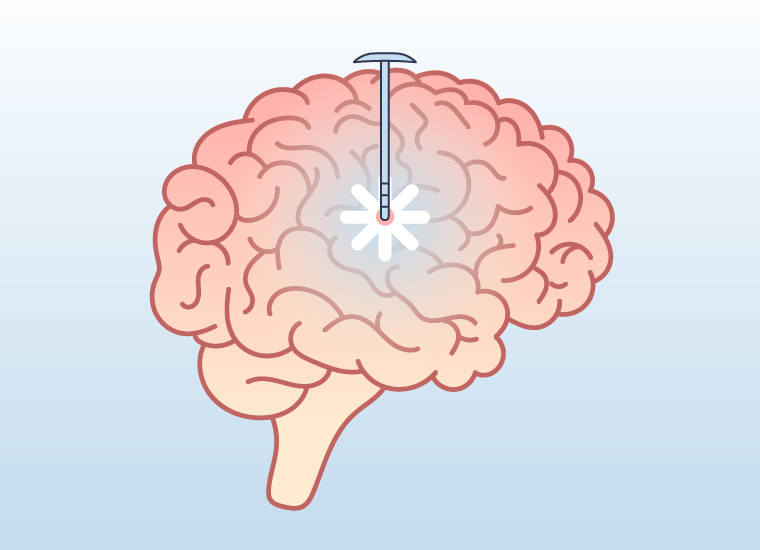
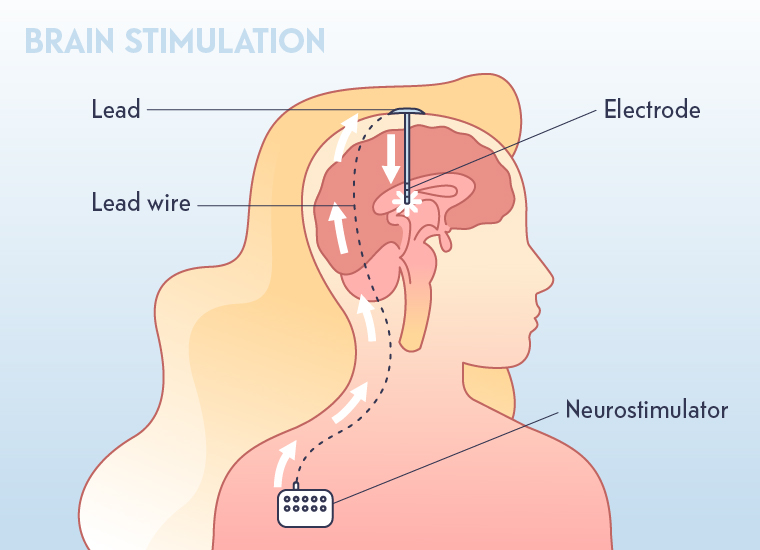
Among these possible variations, the two most frequently observed forms at CHUV are generalised dystonias and focal, isolated dystonias, the cause of which remains unknown. These forms present very different clinical features and treatments: generalised dystonias, both isolated and complex, usually begin in childhood or adolescence. They are treated with medication and, sometimes, deep-brain stimulation. This technique involves delivering a low-intensity electrical current into specific brain structures via electrodes connected to a box placed under the skin. In the worst cases, when dystonia progresses and spreads rapidly, patients may die after only a few years. However, some isolated generalised forms, with adequate treatment by deep-brain stimulation, allow patients to lead an almost normal life.
This is the case of Sophia Mohn. During adolescence, the paediatric neurologist treating her convened a group of neurology experts (from CHUV and internationally) to assess her. A diagnosis of dystonia was made. The young girl initially took muscle relaxants, which proved ineffective. The medical profession, including Dr Bally’s team, then considered deep-brain stimulation. The operation took place in July 2023, when Sophia was 14. The intervention was a success; relief was evident the day after the electrodes were placed, with some adjustments afterwards. Today, at 17, Sophia has a completely ordinary life. She is in the 2nd year of the gymnasium and plays golf at a high level, as well as a little tennis and dancing. “I am so grateful to be able to walk and carry out every movement of everyday life without difficulty”.
Focal isolated dystonias include cervical dystonia (the most common form), blepharospasm (involuntary eyelid closure), and functional cramps (also known as task dystonia), which affect writers, athletes, and musicians. These dystonias begin in adulthood. They are treated with botulinum toxin injections, which allow those affected to lead an ordinary life, with 4 to 5 injection cycles per year. “They do not spread, or very rarely, and are therefore little or non-evolutionary,” confirms Julien Bally.
Rare Diseases in Need of Expertise
Complex dystonias present in an infinite variety of forms, some of which have not yet been encountered at CHUV because they are so rare. “It is important for CHUV stakeholders to develop expertise in these rare diseases, work in a network with other major centres, and disseminate knowledge of these diseases to the general public and primary care doctors so that patients are properly informed,” says Julien Bally.