

GENDER MEDICINE UNDER THREAT: SWITZERLAND HOLDS FIRM
Publié il y a 7 mois
25.08.2025
Partager
During a visit to Lausanne last June, Nancy Krieger painted a gloomy picture of the current situation in the United States. The Harvard epidemiologist, whose work on gender and racism in global health inspires all the way to Switzerland, returned to the repeated attacks against science by the federal government. Dozens of American health researchers have had their funding suspended since the beginning of the year, sometimes simply because their projects contained the words 'women', 'trans', or 'diversity'.
Joëlle Schwarz, co-head of the 'Health and Gender' Unit at Unisanté in the canton of Vaud, is worried about this backward step. For her, the decree issued by President Donald Trump shortly after his inauguration is particularly problematic. According to the text, the official policy of the United States government is that there are only two sexes, which are "not modifiable and rooted in a fundamental and unquestionable reality": male and female. "If the health community is only interested in the category of ‘man’ or ‘woman’ as stated on a person’s ID, they overlook the fact that biology is actually not binary and that these two groups are not homogeneous", explains the Lausanne-based researcher. On the one hand, this excludes all people who exhibit variations in sexual characteristics (called intersex people). On the other hand, this does not take into account hormonal variations between same-sex individuals. “Moreover, it erases decades of evidence showing that differences between women and men are not only biological, but above all linked to the gendered social organisation of the world.”
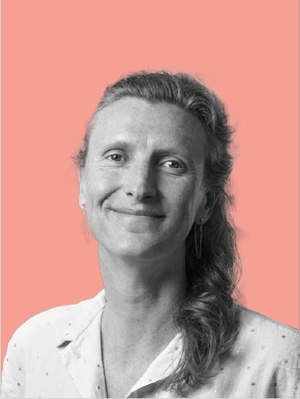
"If the health community is only interested in the category of man or woman as stated on a person’s ID, they overlook the fact that biology is not binary and that these two groups are not homogeneous", explains Joëlle Schwarz from Unisanté in the canton of Vaud.
Even if the situation in the United States prompts us to remain "vigilant" in Switzerland, according to Joëlle Schwarz, the trend seems to be the opposite in our country, where notable advances have taken place in recent years. To this end, the Federal Council adopted in 2024 a report recognising the existence of inequalities specific to sex and gender. “Many diseases that particularly affect women are not sufficiently researched, the report says. Common diseases are diagnosed later in women than in men, and women-specific symptoms are not recognised. Moreover, compared to men, they obtain less suitable treatments. Therefore, they are more concerned with side effects and poor diagnostics.” To address these gaps, a major programme 'Medicine, health and gender' (PNR 83) started in 2025 with 19 research projects funded by the Swiss National Science Foundation (SNSF) for a total of 9.6 million francs.
Influencing medical practice
The Swiss faculties of medicine also collaborated in 2022 to create the GEMS platform, funded by Swissuniversities, to better integrate these themes into medical and nursing curricula nationwide. Tangible progress has been made. In Lausanne, for example, future doctors receive an introductory course that trains them not only in the existing physiological differences between women and men, but also in the social factors that explain variations in health status by gender. Cases such as type 2 diabetes are mentioned. "It is less biology than social norms that explain why men are more affected by this disease than women," says Schwarz. As they pay more attention to their weight for cultural reasons, in connection with the strong normative injunctions around body image, they suffer less from obesity. Students also receive more specific courses, such as gender or "race" biases in pain management or in cases of cardiovascular diseases.
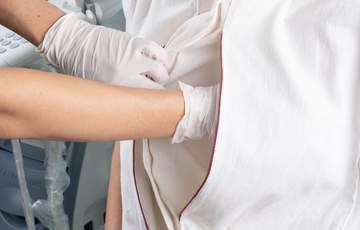
Future doctors also have the opportunity to debrief real situations that occurred during their internships. "We look at whether the same questions were asked to women and men, if physical examinations were carried out in the same way," says the head of the Health and Gender Unit. For example, how male students deal with potential discomfort when performing cardiac or respiratory examinations in the female chest area will be discussed; the goal is to ensure they can deliver high-quality care.”
Influencing medical research
Unlike in the European Union, it is currently not mandatory in Switzerland to specify the extent to which the variable of sex and gender has been analysed for public funding, for example, from the SNSF. Last year, however, the regional and cantonal ethics committees decided to act at their level. "All researchers who submit their studies to an ethics committee must at least consider the relevance of sex and gender variables in their research," explains Angèle Gayet-Ageron. The director of the Institute for Social and Preventive Medicine at the University of Bern is co-leading a study by NRP 83 aimed precisely at measuring the effects of these recommendations.
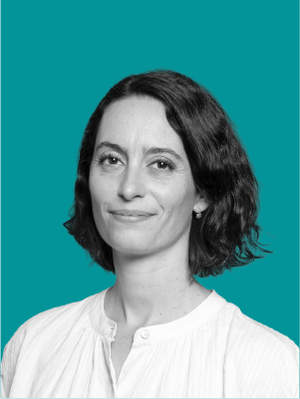
"Researchers who submit their studies to an ethics committee must at least ask themselves the question of the relevance of sex and gender variables in their research," says Angèle Gayet-Ageron, director of the Institute of Social and Preventive Medicine at the University of Bern.
If individuals who appear before the ethics committee indicate they did not take sex and gender variables into account in their study, they are asked to justify their decision. "And if they have integrated them well, they are invited to specify how they intend to measure them," notes Angèle Gayet-Ageron. For example, if gender is considered, will they identify gender identity or expression, or another dimension such as sexual orientation? Regarding sex, will hormones be measured and, if so, which ones? Specifying these aspects is crucial for the interpretation of results.”
The professor from the University of Bern and Joëlle Schwarz are founding members of a new association that brings together more than 100 people, specialists in medicine, pharmacy, physiotherapy, the human sciences, or even nursing. "The recent creation of the Swiss Society for Gender Health will continue the current collective momentum to improve the health of the population in all its diversity," explains Angèle Gayet-Ageron. The group wishes to continue "getting things moving" in Switzerland and thus avoid going down the same path as the US.
To go even further
The GEMS platform offers teaching materials addressing sex and gender issues, in order to promote their integration across medical curricula:
https://www.gems-platform.ch/en/aboutThe article « Intégrer le genre dans l’enseignement médical prégradué » (Integrating gender in undergraduate medical education), written by Alexina Legros Legros-Lefeuve, Virginie Schlüter and Carole Clair, was published on June 31, 2021:
https://www.revmed.ch/revue-medicale-suisse/2021/revue-medicale-suisse-744-2/integrer-le-genre-dans-l-enseignement-medical-pregradue-actualites-et-perspectives-pedagogiquesThe National Research Programme for Gender Medicine and Health :
https://www.nfp83.ch/en